6/27/2017 Tuesday – York Minster
This city is a historian’s dream. It has 2000 years of documented history and an even longer archeological history. Celtic tribes occupied land where the rivers Ouse and Foss join. Then the Romans conquered the tribes. Then the Saxons took over. Then the Vikings conquered the Saxons. Then the Normans conquered everyone and they evolved into the present day British. Each contributed to the city, often building over or incorporating the previous occupants’ living areas.
One place where we can see evidence of that history – at least back to the Romans – is the York Minster. The land on which the church rests was an important location. The Romans built a fortress there whose foundations can be seen in the Cathedral undercroft. The Christians built their first wooden church there in 627AD and shortly after that the first stone church was built. After the Normans came, the first large cathedral was built in the Norman architectural style. One hundred years later Gothic architecture became the rage for churches and in 1220 the cathedral we see today was begun.


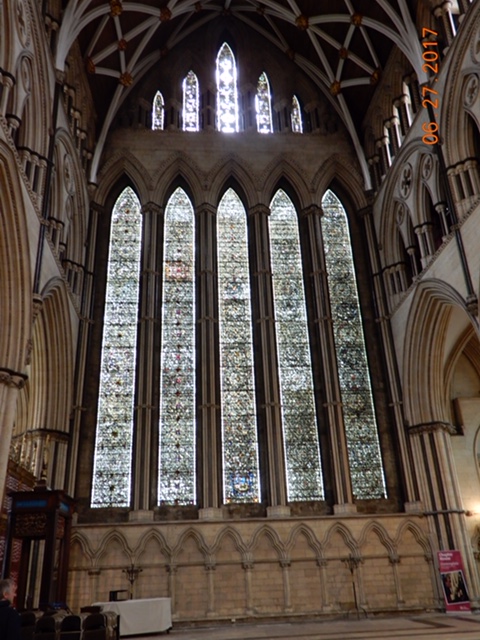
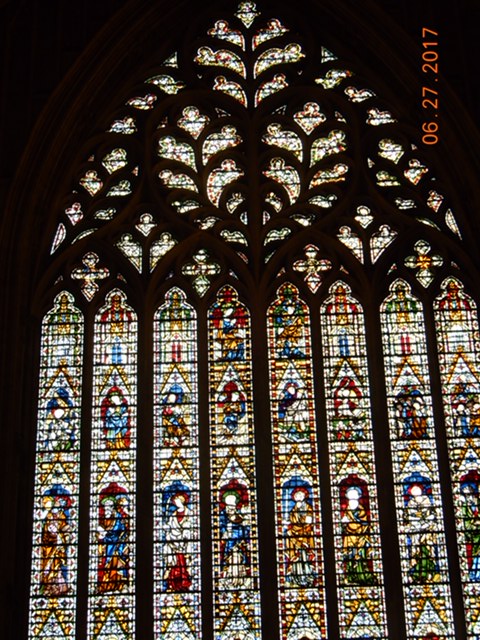
The York Minster dominates the skyline in York. It is the second largest Gothic Cathedral in Northern Europe (Cologne Cathedral is first). It is famous for its stained glass windows. The 76 foot tall Great East Window is the largest medieval stained glass window in the world. All four sides of the minster have windows of note. The south has a Rose Window. The West has the Heart of York window, the north has the Five Sisters – 5 lancets reaching up 50 feet.



Fifteen stone statues representing 15 English kings make up the choir screen separating the choir (quire) from the nave. The kings begin with William the Conqueror and end with Henry VI.

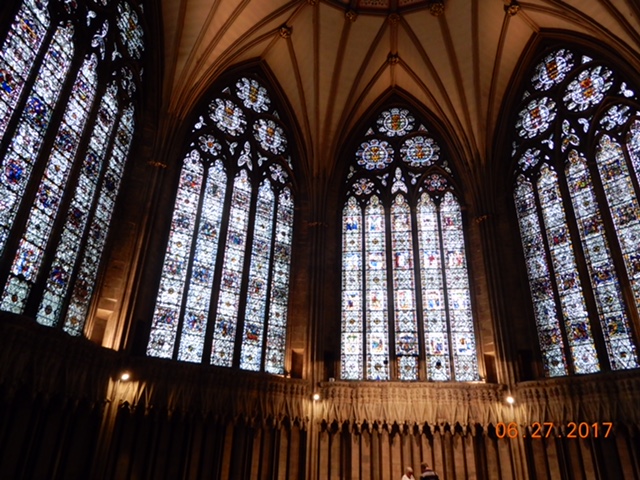
The Chapter House – the meeting place for cathedrals – is octagonal shaped and surrounded by still more stained glass windows, giving it a light and airy feel.
It costs £21,000 a DAY to maintain the Minster. An 800 year old building needs a lot of help to maintain its physical integrity, we gladly paid the £8.25 entry fee (which by the way, is good for a year, so if anyone reading this plans to visit York in the next year, look us up we have the tickets).
Some of that money goes toward restoring the stained glass windows. The artists and craftsmen are currently working on the Great East Window. While the lower ¾ of the window had been completed, parts of the upper window had clear glass wrapped in the lead outlines awaiting the restored pieces to be reinstalled.


Beneath all of this is the crypt and the undercroft. I missed the crypt, being too wrapped up in reading every word posted in the church, but I did get to the undercroft where the history of the land was displayed. The Minster sits above the old roman fortress whose remains were discovered in early 2000s during an engineering project to re-enforce the main tower above.
This fortress is where Constantine the Great was elected emperor by his soldiers and from here went on the create Constantinople and make Christianity the religion of the Roman world.
All told, it was pretty nifty.
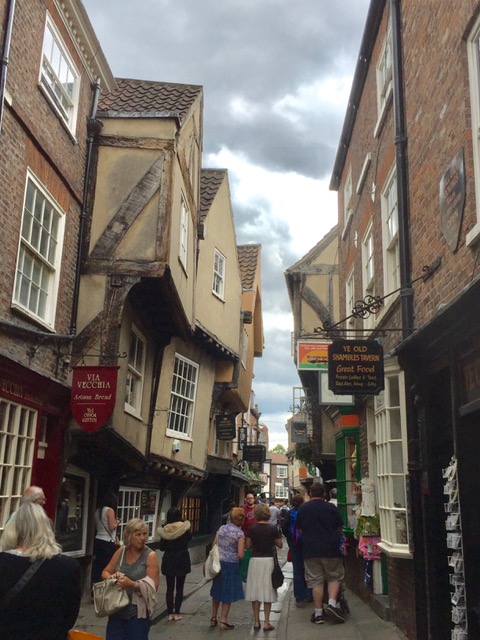
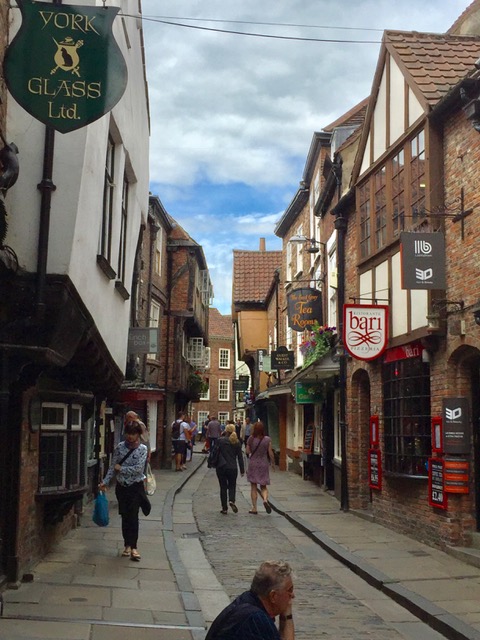
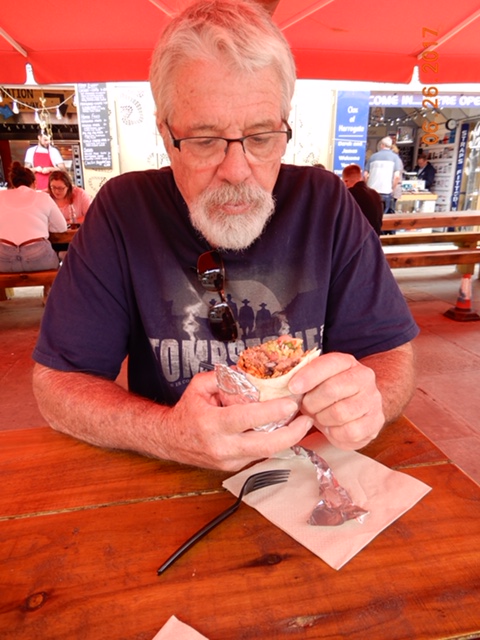
We left the minster to find a bite to eat and wander the streets some more before returning to the camping. We were on the lookout for a red devil, a golden bible and Minerva, goddess of wisdom, plus any cats we might find on the “cat trail.” The Devil, the goddess and the Bible originally represented store types; Minerva and the book used to be above book stores while the Devil represented a printer’s shop. The cats were just for fun.


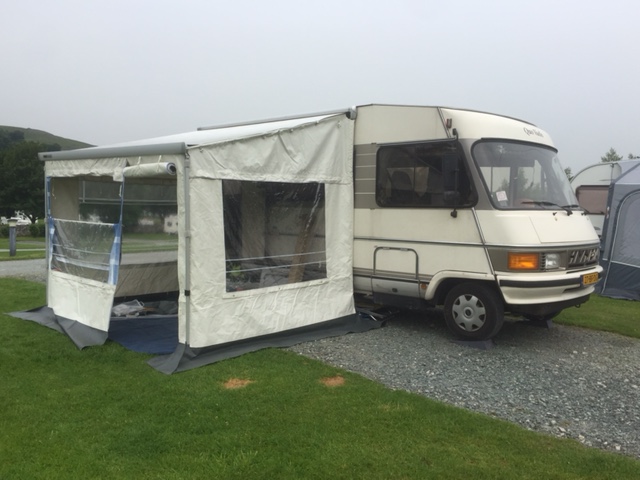
Wednesday we were supposed to visit the Rail Museum but it rained all day and we stayed “home” hoping it would stop. It didn’t, so we extended our stay in York one more day to visit the museum on Thursday.



















 Bruce N' Peg