6/22/17 – The Bronte sisters & Fountains Abbey and Studley Royal
We left Settle Thursday morning after checking our social media accounts and learned from Lisa T-H that we were in Bronte country. As my ignorance of the Peak District showed, our knowledge of English geography is terrible. We were in the Yorkshire Dales, but I always thought the North Yorkshire Moors in the east were the moors referred to in Charlotte Bronte’s novel Wuthering Heights. As voracious a reader as I am, I’m ashamed to say I have never read any of the Bronte sister’s novels. I have no clue about the storylines nor the locations in which they are set. All I know is sweeping moors play an important part in Wuthering Heights, and I have been to the the North Yorkshire Moors. In this case, one plus one does not equal two. The Brontes spent their lives in the Yorkshire Dales. In England a dale is a valley. Valleys lie at the bottom of hills
We were only 25 miles away from Howarth, the town the family lived in, and we decided we would visit the Bronte parsonage where the family spent almost their entire lives. We plugged Howarth and Bronte Parsonage into Tammy/Theresa and set off.
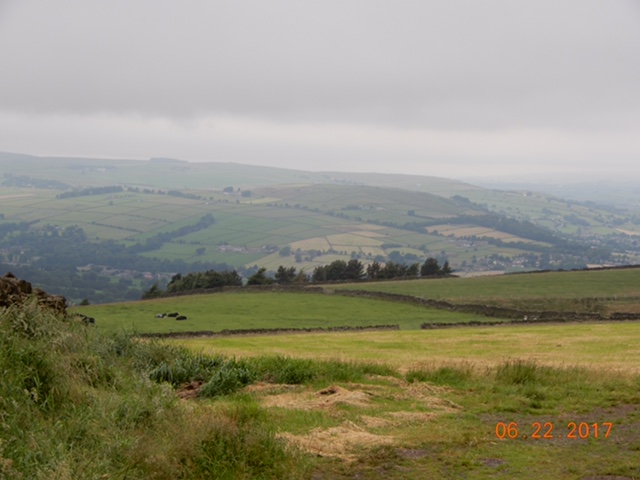
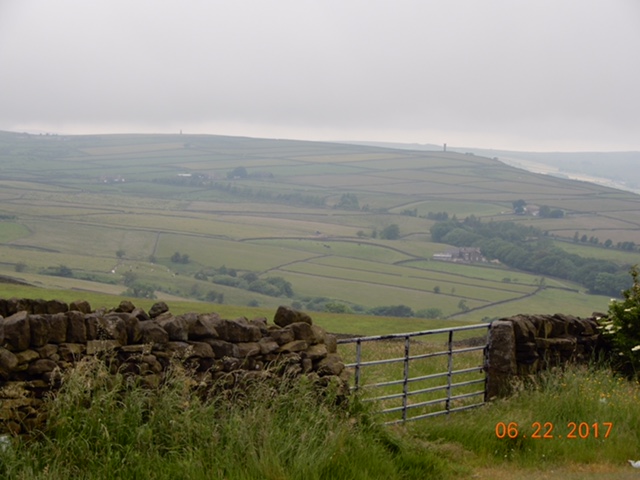
The roads we followed took us over hill and dale, through wee little villages and onto wee little roads with 16% grades both up and down. At 12 mph it took us some time to reach the top of the hills and we saw a panorama of wind blown fields and drystone walls drawing crisscross lines across the hillsides. We got out of the van and were immediately buffeted by winds blowing across the hills. There was a sense of loneliness and isolation up there at the top and I could imagine that influencing the Bronte writing.
We still hadn’t arrived at Howarth, so we continued up and down hills along tiny lanes winding our way around villages until we finally came up to the village.
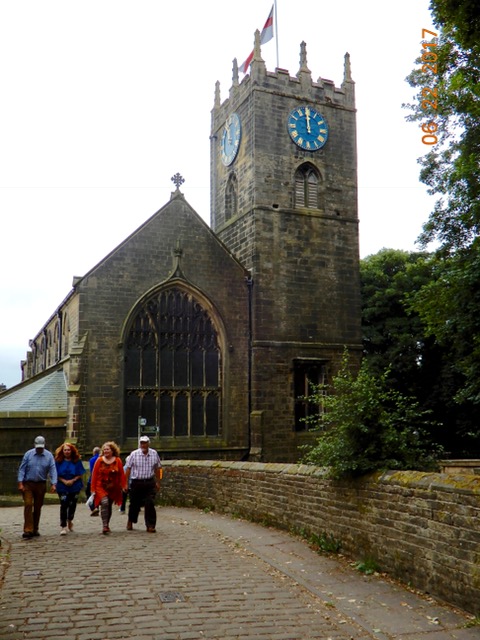
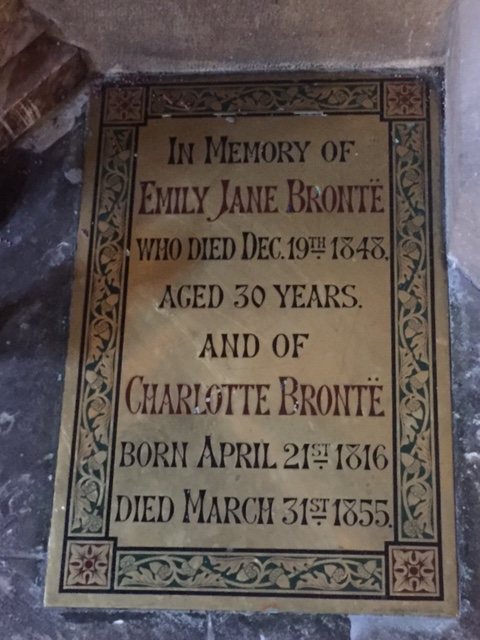
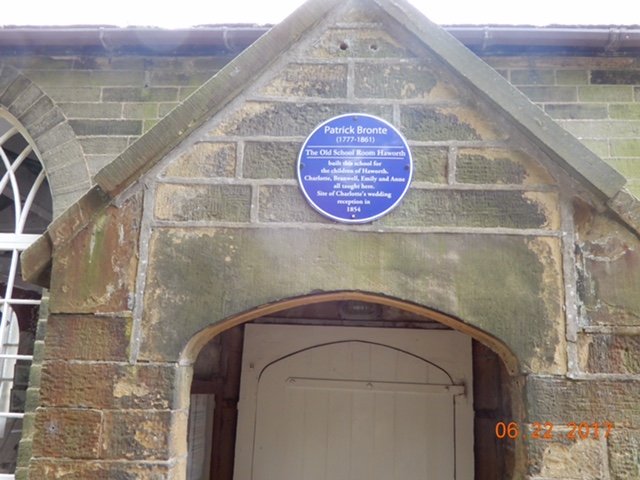
There are a lot of literary people in this world. Three buses were in the pay and park lot and the village teemed with tourists. I had no idea this would be such a popular tourist attraction especially since it was so difficult for us to get there; we assumed it would be fairly quiet. We walked to the church where the patriarch, Patrick Bronte was parson for life (perpetual curate). He was a published poet so his six children grew up in a lettered home.
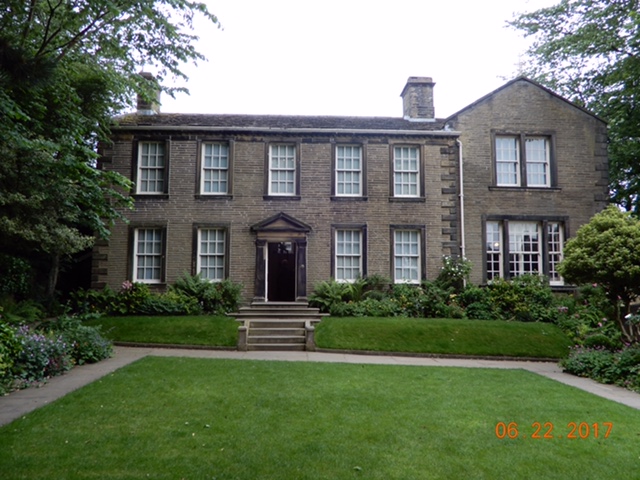
The Brontes were a tragic family. In 1821, after living only one year in Howarth, Maria Branwell Bronte, the mother of six children, died of cancer, she was 38. Four years later the two eldest daughters died of tuberculosis within months of each other. Branwell, the only boy in the family, died from alcohol and opiate addition at age 31. Emily and Ann, the two youngest sisters were 30 and 29 when they died. Charlotte managed to live through her 30s, dying just before her 39th birthday. Only Patrick lived a long life, dying at age 84, outliving all of his family. How sad.
Howarth was probably little changed since the days of the Brontes, most building were of the local stone with the stone shingles slowly weighing down the rooflines. Narrow streets were lined with small shops. I always wonder how the locals feel about the tourists than invade their home during the days. I can imagine that no matter how much money comes into the town, they are relieved to see the buses leave.
We left before the buses, taking a much easier route out of town and onward to Ripon. We were going to visit Fountains Abbey and Studley Royal Water Gardens – a World Heritage Site and an English Heritage Site.
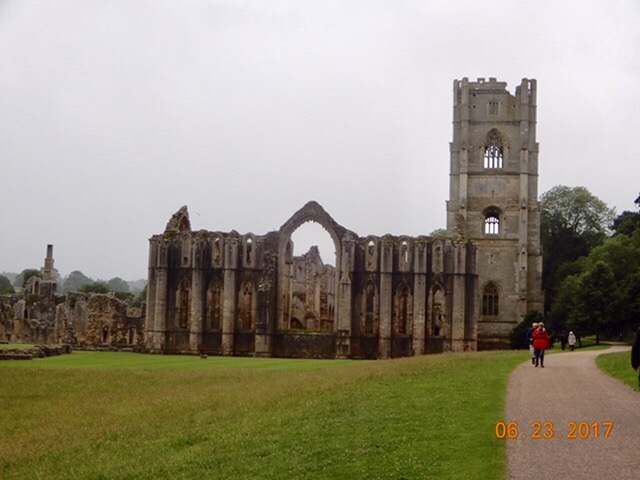
Fountains Abbey is one of the largest and best preserved ruined Cistercian monasteries in all of England. Founded in 1132, it became the wealthiest monastery in the land. During the Dissolution in the late 1530s, Henry VIII disbanded all monasteries, priories, convents and friaries, appropriating their income, disposed of their assets and pocketed the money.


Today the Abbey is part of the Studley Royal Water Garden complex run by the National Trust and English Heritage. The Studley Royal Georgian Water Garden is a park with water features, pathways, copies of classic sculpture all laid out on hectares of land that was designed by the father and son owners of Studley Castle grounds. Surrounding the Abbey and Gardens is the Studley Royal Deer Park, home to over 500 red deer and the lovely St. Mary’s Church.


The whole complex is unbelievably beautiful but the abbey ruins were the thing to us. We have seen some church ruins but this…this was something! The size of the abbey was shocking. It was built in an open meadow giving it a lot of room to expand, and it did. The ruins are stunning – we can only imagine how it looked in the years before the Dissolution.
 Bruce N' Peg