6/26/17 – York
Saturday morning, we left River Laver Holiday Park – our camping for Fountains Abbey. I have to say; it was an immaculate campground. It only had 10 spaces for touring caravans and motorhomes, its stock and trade is selling static caravans (park model trailers in US), but the park facilities and grounds were impeccable.
On our way to York from Ripon – a whole 41 miles – we missed a Roman site outside of Aldborough. We are greatly attracted to Roman ruins and ancient churches so this was a disappointment. As we continued along, Bruce spotted a road sign directing us to turn right to visit an “ancient church.”

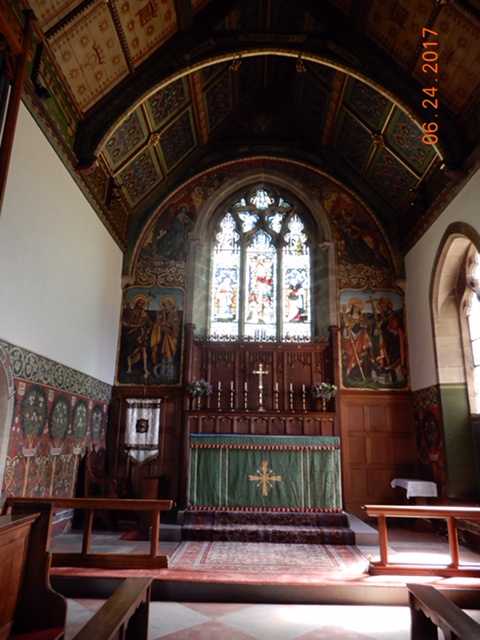
We drove a couple of miles down the requisite1-1/2 lane-wide roads until we reached the village of Kirk Hammerton and found our ancient church. The tower and south aisle was original Saxon work – built around 950AD (before William the Conqueror of 1066). Other parts of the church were rebuilt, destroying the old Saxon parts and replacing it with varying success throughout the church’s 1000+ year history. I was fortunate enough to share my viewing of the church with a couple who belonged to a group that studied old pre-Reformation churches. They shared some thoughts with me regarding the structure of this church.
We made landfall at our first York camping around 1pm. It was a family owned working farm that dedicated about ¾ acre to a certified camping site. They also raised sheep and goats and were quite successful bringing in the campers. At £22.50 per, we guesstimated they took in between £300-£400 the night we stayed. A very good supplemental income. We only stayed at the certified site for one night because we were lucky enough to find space at Rowentree Caravan Club site, located on the grounds of a public park right in town. Location, location, location! It couldn’t get any more convenient than this.

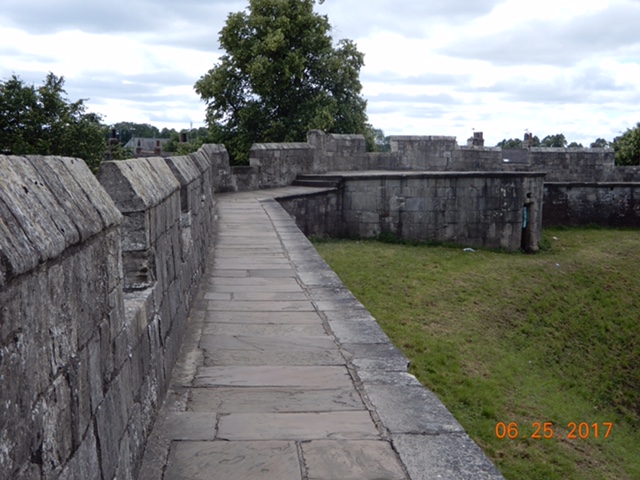
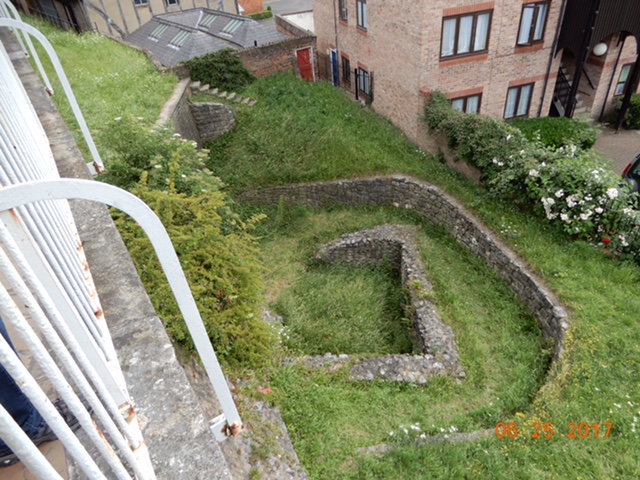
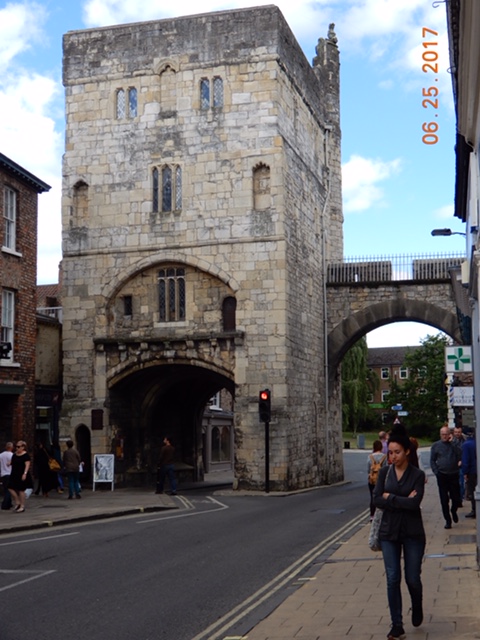
Sunday afternoon we walked the York city walls. York has more intact city walls than any other city in England. The two-plus miles of wall have protected York for 2000 years starting with the Romans and continuing through Saxon, then Viking, then Norman occupations. The Romans built walls that survived to the Viking invasion. In the 9th Century the Vikings buried the roman walls with a dirt bank topped with a wooden palisade which remained until the present medieval stone walls were erected in the 13th and 14th centuries. There were four main gates – called Bars – and six secondary gates giving access to the city.
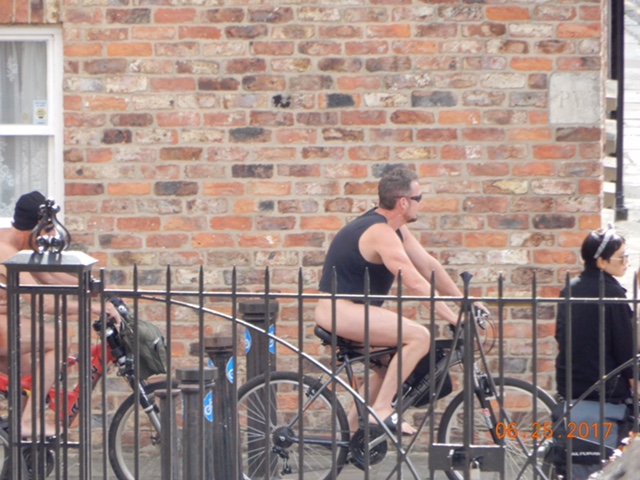
We had visited York in 2000 but only walked a portion of the walls, Sunday we walked the whole thing. It’s pretty impressive. Along our way we heard someone shouting like a town crier in the streets and between buildings we saw a small parade of butt-nekkid male bicycle riders. We were only quick enough to get a photo of the last participant which we happily share. We don’t know, but we thought it may have been a Gay Pride event since such things were happening elsewhere in the world. It was fun to see!
Monday we walked the town within the walls. It looked like the weather, which has been very nice – high 60s – was going to take a turn for the worse beginning Tuesday. We needed to top off our SIM card after which our goal was to reach the Shambles, probably the most famous street in all of York.
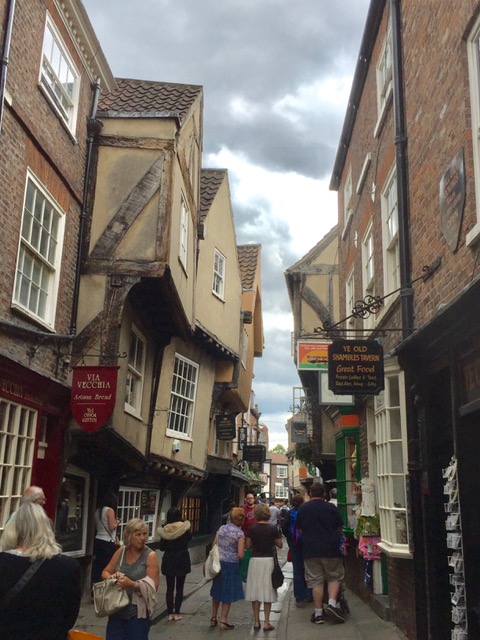
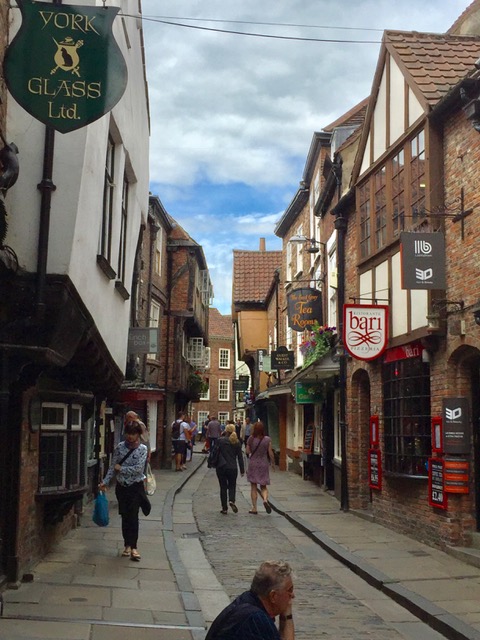
The Shambles is a street in York City Centre dating back to at least the 14th Century (1300s). It was originally where the butcher shops were located. The name is believed to be derived from Anglo-Saxon “Fleshammels” (literally “flesh shelves”) or where the butchers laid their meats out for sale. It is famous for the overhanging half-timbered buildings leaning towards each other in a most picturesque manner. Originally those overhangs protected premature meat spoilage from sun exposure. Today, instead of butcher shops, restaurants, souvenir shops and the like occupy the street.
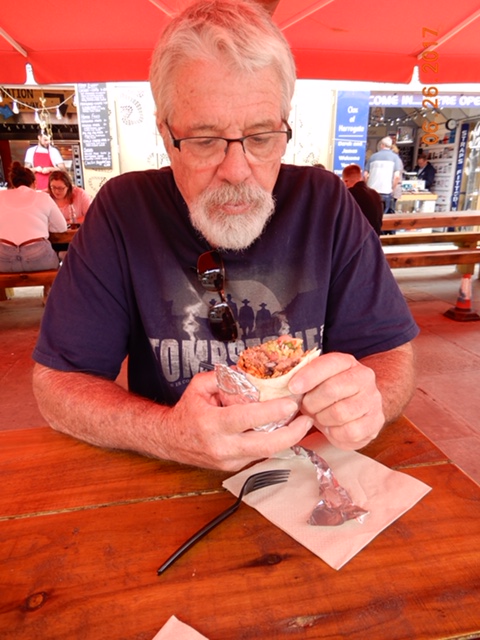
An open air market was occurring in the square the Shambles opens onto and we had lunch there; a pulled pork wrap sold by an enterprising young chef who was introduced to the recipe while attending college in North Carolina for a year.
We spent the remainder of the day at the Castle complex museums.
The castle complex dates back to the time of the Norman conquest. In 1068 the Normans subdued rebels and Vikings and built a motte and bailey castle. A motte is a raised earthwork and a bailey is an enclosed courtyard protected by a ditch and palisade. A wooden keep (fortified tower) was on top of the motte.


An infamous event happened at Clifford’s Tower in 1190 when riots against Jews forced about 150 of them to take refuge in the wooden tower. Given the choice of conversion to Christianity or death at the hands of the mob, the Jews chose a third option: suicide. They set the tower keep on fire and died within as it burned. In present times, daffodils have been planted around the tower mound in remembrance of the massacre.


After the fire, the keep was rebuilt in stone and the remains of that structure is what we see today along with the castle buildings at the base of the mound. The castle buildings have housed courts, treasuries and prisons over the course of it 1000 year history.
Today, the castle houses a Victorian-age museum. In the late 1890s Dr. John Kirk began a passionate (I might say obsessive) collection of all things Victorian. In time his collection was so large that he struck a deal with the city of York to develop an innovative museum in the former women’s prison at the castle. The museum features period rooms and a re-creation of a Victorian street named Kirkgate. It is a fascinating way to spend an afternoon. As usual, when we visit museums, I read everything plaque and peruse every display ad nauseam. We’ve developed a rule that we cannot leave a museum gallery separately for fear of losing one another. Bruce is always finished before me and yet he is the most patient soul awaiting my arrival.
 Bruce N' Peg