


We have experienced our first Aire of this trip. An Aire is a designated parking place for motorhomes. The Continent is full of them. While in England, we ordered books from Vicarious Books, listing all Aires for France and Spain.
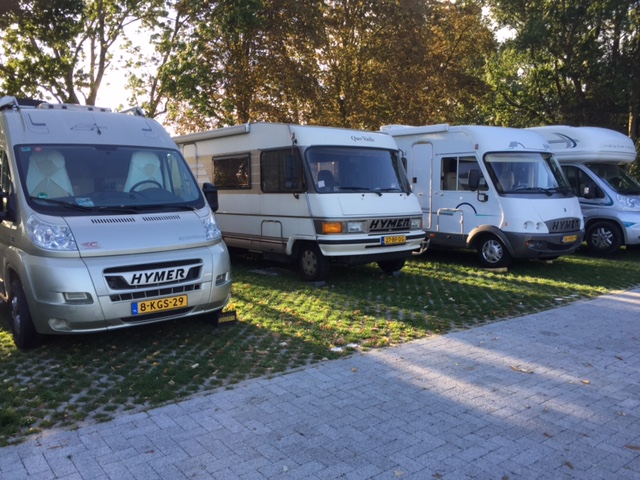
We are still in Belgium but we were told of this aire by a camping that was full and we could not get into.
Let me back up a bit:
In the morning we returned the plumbing parts we could not install, due to lack of proper tools, and began our return trek to reach the Normandy coast. Having seen a great deal of what the continent has to offer a traveling tourist, we were on the lookout for new-to-us places to see. Just NW of Lille, France is the Belgian town of Ypres, made famous for several battles in WWI and for the 500,000 men who lost their lives in one battle alone. The Fields of Flanders are the lands around Ypres.
Ypres is the French name for the town – the Flemish name is Ieper (that is a capital I -not a small L. I say that because our map made the name look like leper, which I chose to call it for a bit). The English speaking soldiers had trouble pronouncing the name and nicknamed the town Wiper. (It wasn’t until I read this little factoid that I realized my mistake.)
Ypres/Ieper/Wiper was along our path to France so we decided to give it a look. We found a camping that looked promising and plugged it into Tami. After a long day’s drive over smaller roads than we preferred, we arrived at the camping. It was in a perfect location for visiting the town. Unfortunately it was full with no openings until the following Wednesday – this was Friday. The camp host did direct us to the aire. This particular aire has 16 spaces for motorhomes at a cost of €8/24 hrs including electricity and a toilet dump. If you need water to fill your tanks, add €1/100 gals. It’s a great deal and still only 3km into town. What it doesn’t have is a shower but we could easily go 2 days at a time without one, then pop into a regular camping for the shower/laundry bit. I can’t say how often we will do this but its great to know it is as successful an option as it is.
The city still commemorates the WWI fallen with a nightly tribute at the Menin Gate Memorial to the Missing. At 8:00 pm each night, traffic through the Gate is stopped while the “Last Post” is sounded by the local fire brigade. Imagine…a fire company that not only fights fires but also includes musicians in the force – how wonderful is that? The tribute is in honor of the memory of British Empire troops who fought and died there protecting the city. One hundred years later and the Belgians still honor the fallen soldiers of the British Commonwealth. I am impressed.
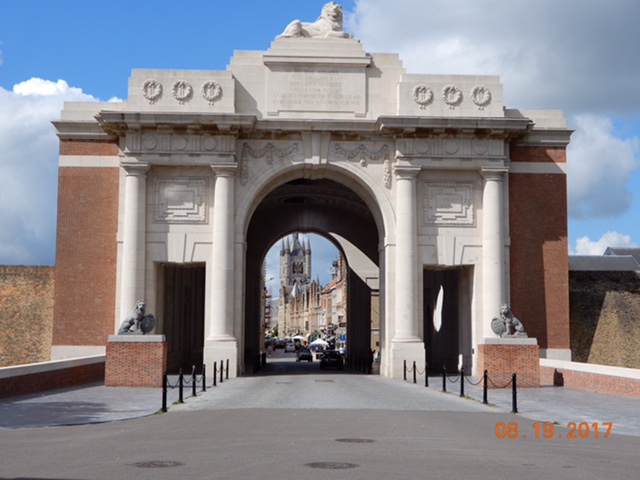
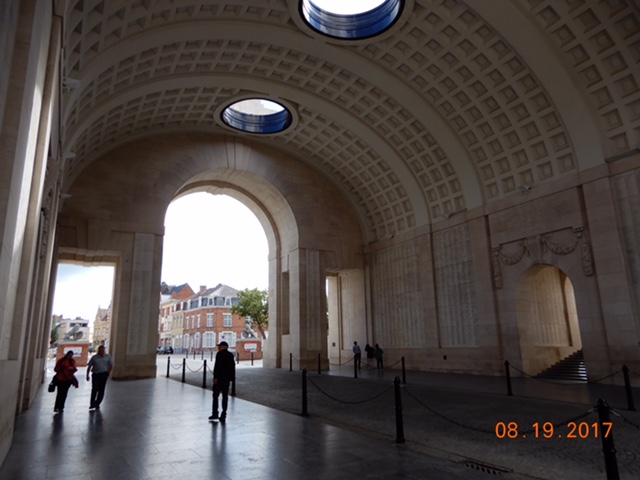
We went into town late Saturday morning since we intended to stay until after the Last Post ceremony. We rode our bikes the easy 3km into town and parked them near the massive Menin Gate, a historically important entry to the town center. This Menin Gate was constructed after WWI and dedicated in 1927. It records the names of 54,896 soldiers of the British Commonwealth who died at the Ypres Salient and whose bodies were not recovered.
Ieper has a long long history starting with the Roman occupation in the first century BC. In the Middle Ages Ieper was a prosperous Flemish city and was mentioned in The Canterbury Tales. In the 13th century the Cloth Hall was built. It was one of the largest commercial building in the Middle Ages and served as a market and warehouse for the city’s linen industry.
In WWI the city and the surrounding area was pounded into the ground by artillery during the course of the battles that took place in the area.


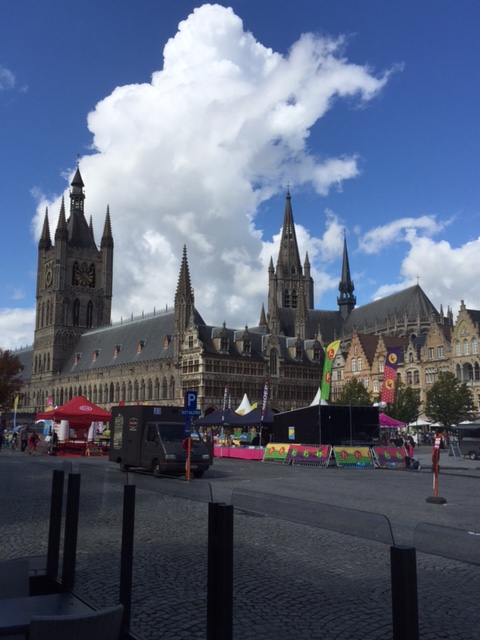
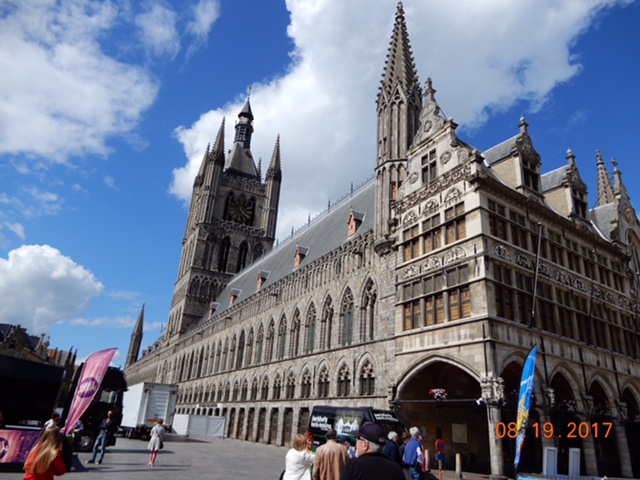
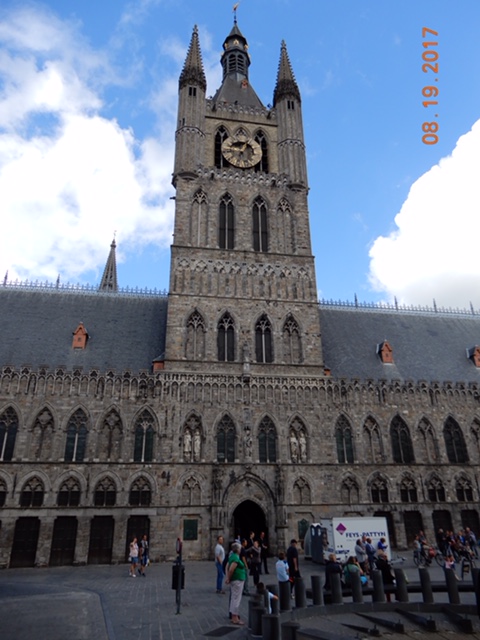
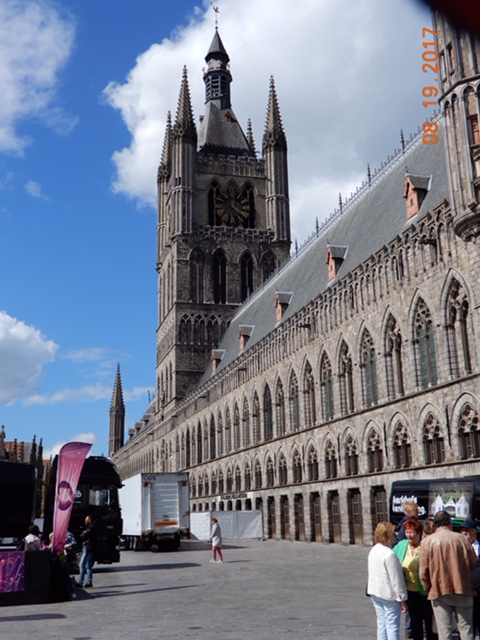
We walked through the Menin Gate, down the street and into the market square where we were confronted with the Cloth Hall – easily the largest and most impressive ancient secular building we have ever seen. To think the original building was built 800 years ago and didn’t belong to the Church was to realize the wealth of the city. The Cloth Hall contains the Flanders Fields Museum, that gives the history of WWI’s impact on Ieper and the immediate area. We had every intention of going through it but were so taken in by the rest of the city that by the time we returned to the museum, it was closed.
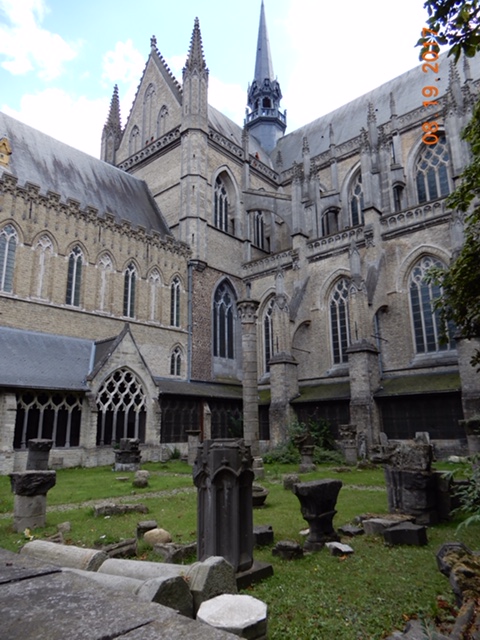
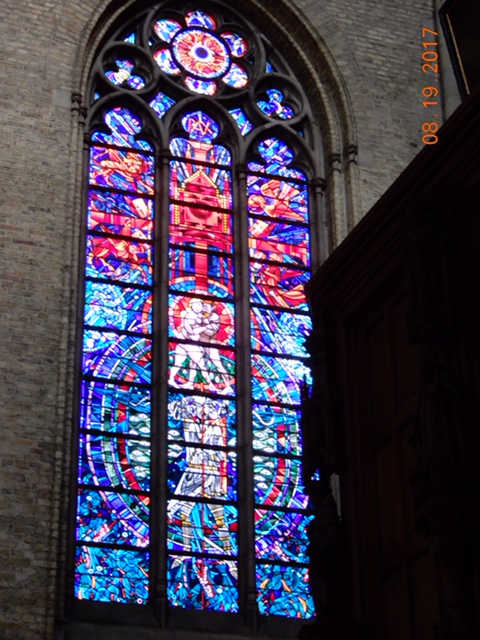
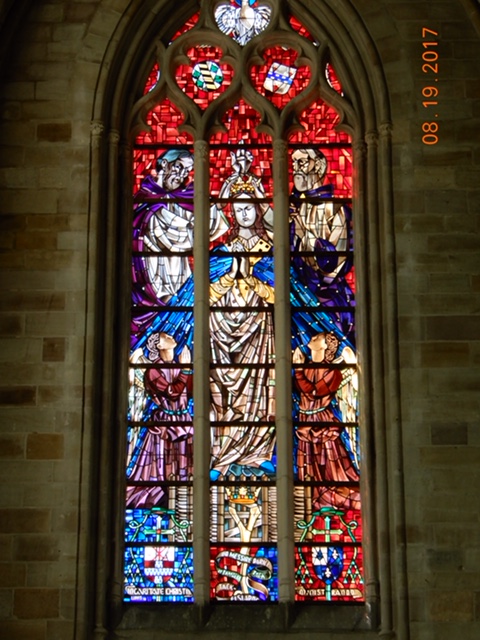
Right next door was the cathedral, also rebuilt after the war. The cathedral was an interesting study in stained glass window styles; ancient vs modern with a greater use of rich blues and subject matter that reminded us of the Chagall stained glass windows we have seen.
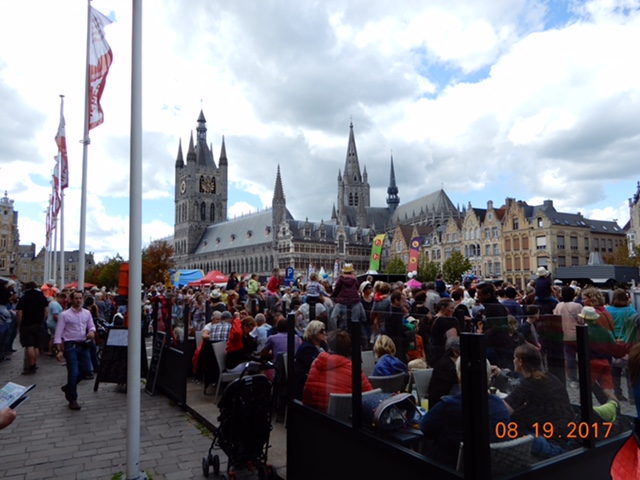


It is a respectful event and very, very impressive.
 Bruce N' Peg