9/2/17 – Chartres:
After my lukewarm shower in Alençon, we continued our drive to Chartres. We asked Tami to take us the fastest route and, as usual, she took us where she wanted to go. As it turned out, her way was very scenic and since we weren’t in a big hurry, we didn’t complain.
At one point along our route we found ourselves on an arrow-straight road pointing to a huge chateau. Approaching the chateau, we passed two large square ponds straddling the road and as we got closer still, we were able to see the chateau was completely in ruins.
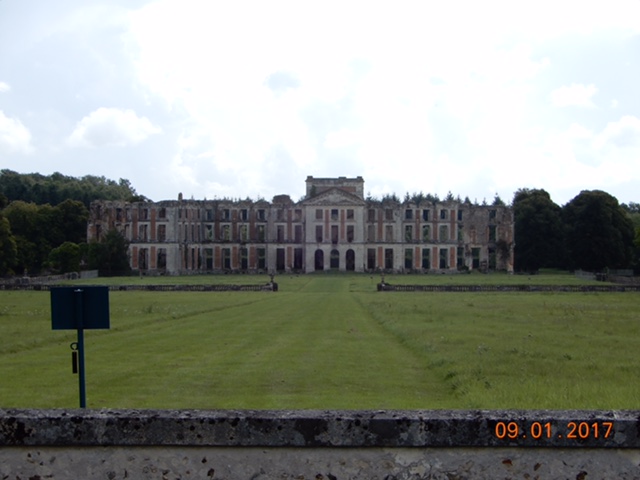


It was the Chateau de la Ferte-Vidame and it had quite a long history beginning in 1374 and ending during the French Revolution when it was plundered by looters. What we saw was the shell that, along with a vast amount of surrounding acreage, has been turned into a park and classified as a historic monument. We were fascinated by this ghostly structure with windows and roofline gone and through whose window openings plant life peeking in.
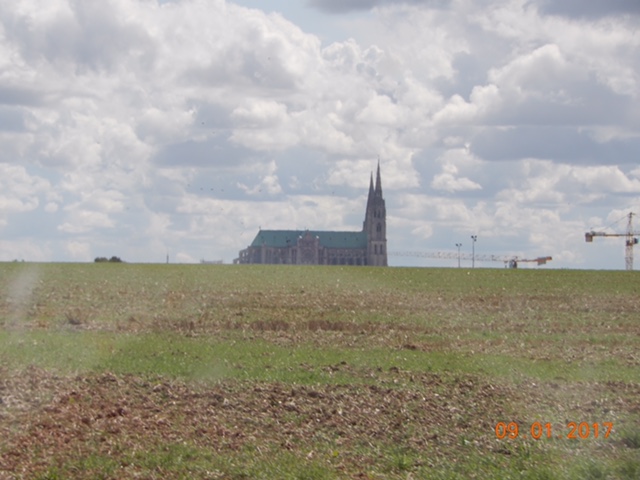
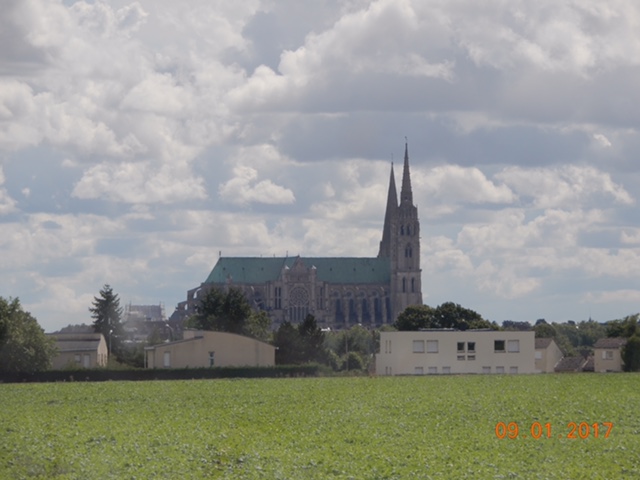
Chartres is only 32 miles from the chateau. After stopping for lunch, we began searching the horizon for our first sighting of the cathedral. The cathedral stands atop a hill and can be seen from quite a distance. When it is first spotted it appears to be a solitary structure. It isn’t until you are almost to the city itself that you can see the rest of the buildings that stand below the cathedral and make up the city. It is the most interesting phenomenon.
The land on which Chartres stands has a very long history. Before Christianity, a Roman temple stood, and before the Roman temple, it is believed to have been a Celtic Druidic center. Each religion attempted to erase its predecessor; so far, at about 1500 years, Christianity has held sway the longest.
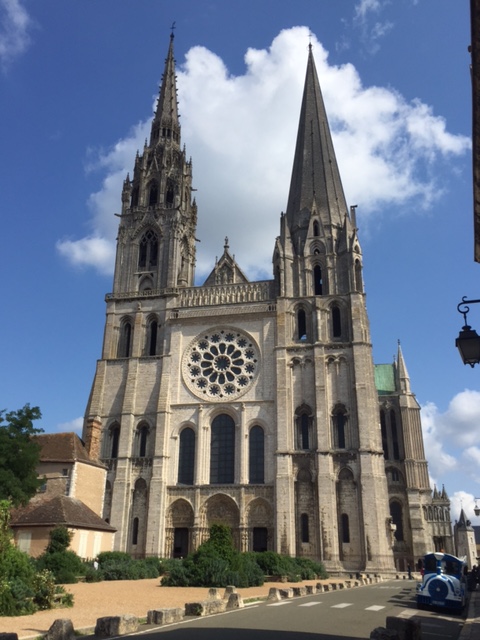
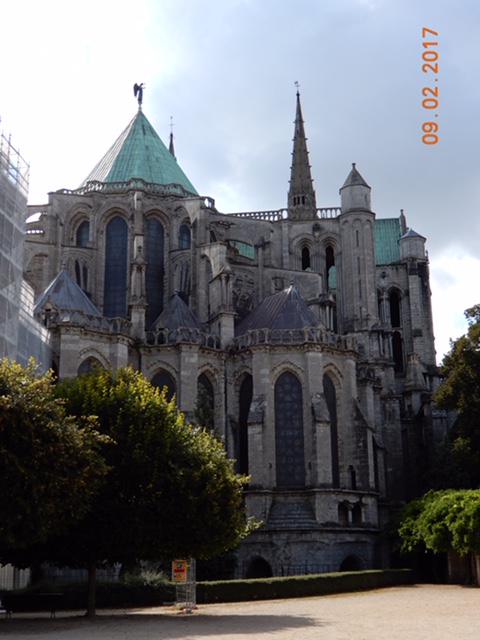
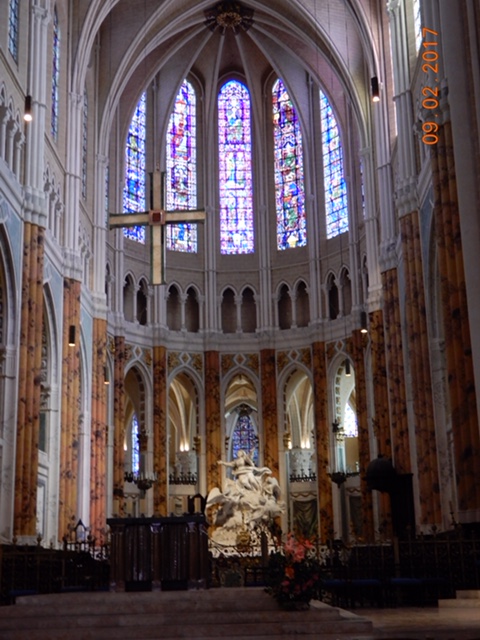


The cathedral is the last of at least five churches that have occupied the site since the 4th century. The medieval architects sought to make it “higher, wider and lighter than all previous churches.” It is probably best known for its beautiful 176 stained glass windows, but it also has an immense amount of sculptures depicting scenes and figures from the Old and New Testaments.
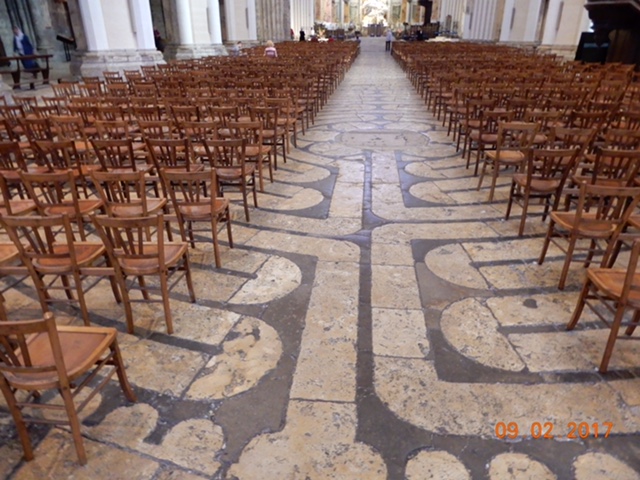
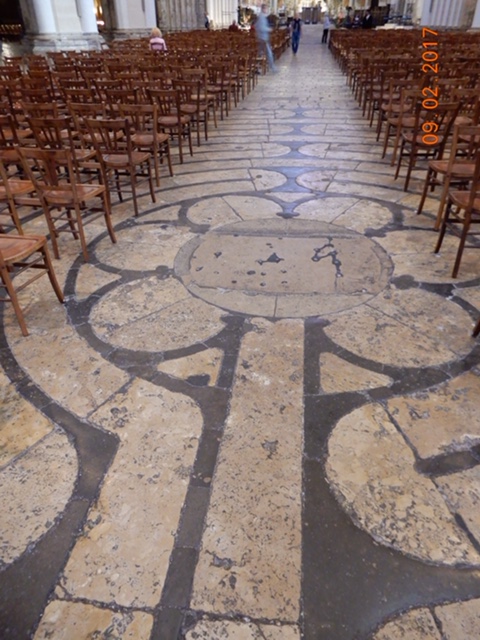
A large labyrinth was built into the floor of the nave and chairs are removed every Friday between Lent and All Saints’ Day so pilgrims can walk it.
The cathedral’s real name is the Cathedral Norte Dame Chartres (Our Lady of Chartres) and it venerates the Virgin Mary.
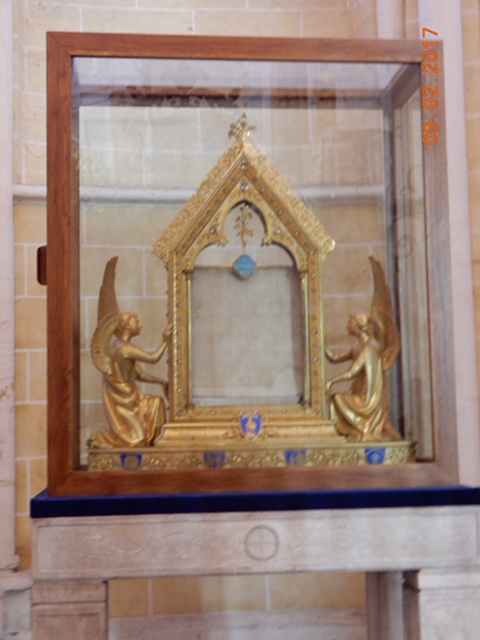
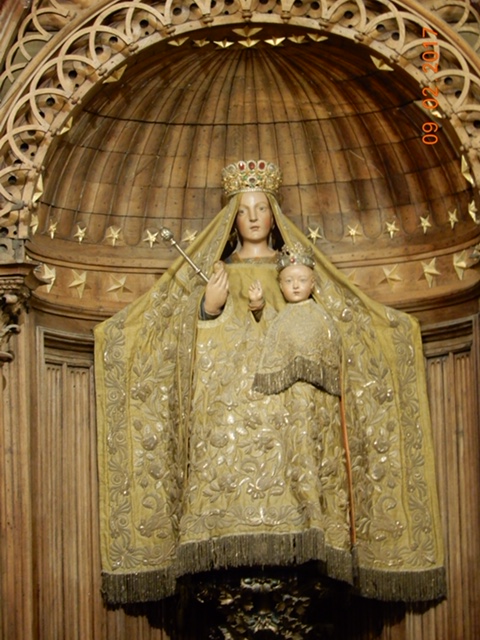
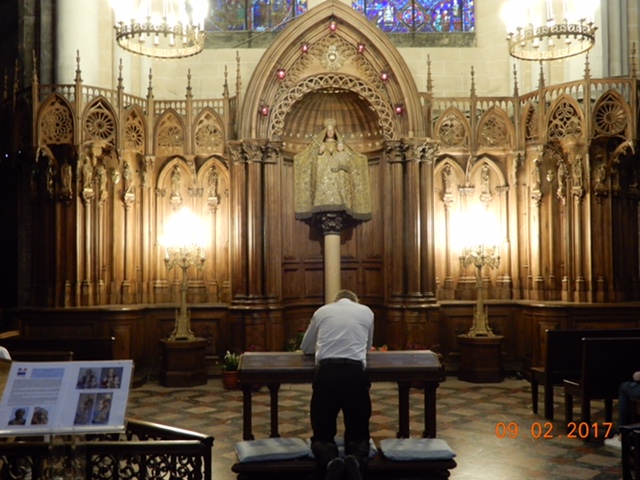


Around 876AD the cathedral acquired the “Sancta Camisa” believed to be the tunic worn by the Virgin Mary at time of Christ’s birth. By the 12th century the relic had made the cathedral an important place of pilgrimage. A great stone screen around the choir stalls displays scenes from the Virgin Mary’s life and continues through Jesus’ birth and death.
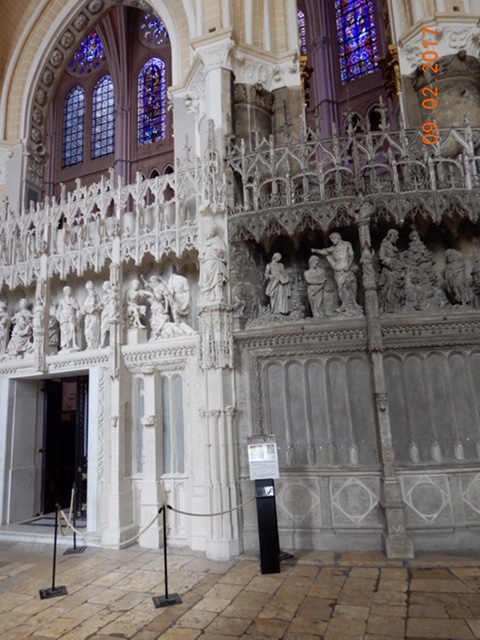
A cleanup project that began in 2009 and intended to be completed by the end of 2017 shows the stark contrast between the smoke- blackened stonework and what was originally a bright and light interior.
There is a lot to see in this cathedral and we spent about 90 minutes just walking around the interior.
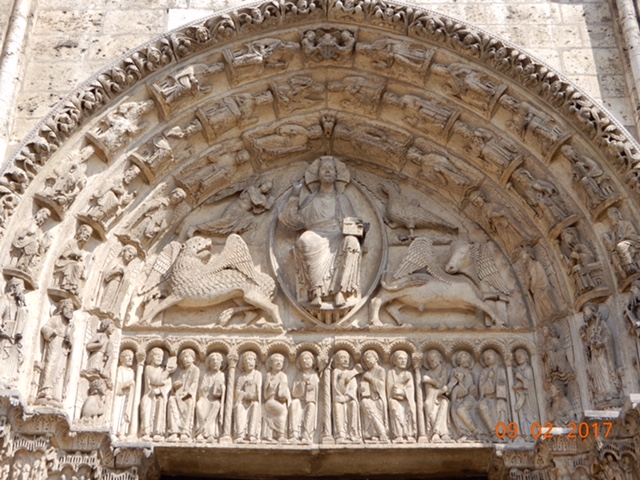
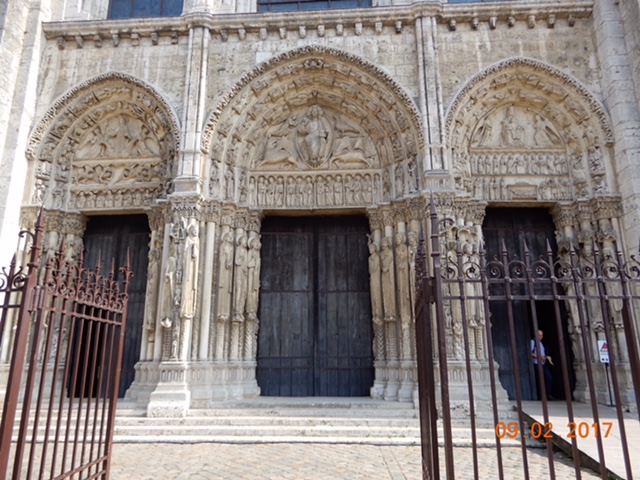
Then we returned to the outside to examine the incredible statuary mounted all over the exterior. The cathedral is a masterpiece that was designated a World Heritage Site by UNESCO in 1979.


The old town spills downhill to rest on the banks of the Eure river. There are many half timbered buildings, some dating from medieval times. A covered market hosts a fresh vegetable market twice a week.


At the market square we were entertained by a Breton dance group, dressed in traditional garb and dancing to traditional bagpiped music. The Scots do not own a monopoly on bagpipes.
 Bruce N' Peg