9/4/17 – Paris – part 1:
We have been fortunate enough to have visited Paris four times previous to this visit. I could not begin to improve on the millions of words written over the centuries that describe the city, but I’ll add my two cents worth.
We have been to some of the world’s greatest museums in Paris, most notably the Louvre and the d’Orsay. We’ve laughed at and delighted in the Pompidou Center of Modern Art. We have visited the Roman archeological site on the Ile de la Cite, we have listened to Gregorian chants in Notre Dame. We have been awed by the exquisite jewel-like Saint-Chapelle. We have ascended the Eiffel Tower and the Arc de Triomph; visited Montmartre and Sacre Coeur. We have searched out famous dead people in Pere Lachaise and Montparnasse cemeteries; we have visited Napoleon’s Tomb and the adjacent Military Museum. We’ve strolled along La Promenade Plantee, the first elevated garden park. We have taken the Seine boat cruise and walked the Ile St. Louis. We have visited Marie Antoinette’s cell in the Conciergerie, the Revolution’s prison. We’ve eaten French onion soup opposite the aforementioned Notre Dame and ridden the carousel at the Hotel d’Ville (that was one drunken ride!) We have hidden from water cannons at the Place de Concorde and have balked pickpockets on the Champs Elysees. We discovered Kir at a little bar near the Bastille and three-fromage sandwiches at kiosks along the Seine. We’ve walked the quays and perused the book stalls. We’ve shopped the flea markets and visited innumerable churches. We’ve wandered the catacombs and gotten freaked out by all the bones. We’ve visited the Pigalle district and the Moulin Rouge. We strode through the great modern business buildings at La Defense and admired La Grand Arche that is aligned with the Arch de Triomph.
We have always enjoyed our Paris visits.


Because we have been here several times before, we wanted to find places we have missed on our last visits.
Our first day in the city had us looking for the Cluny Museum, the Pantheon and Hemingway’s haunts.
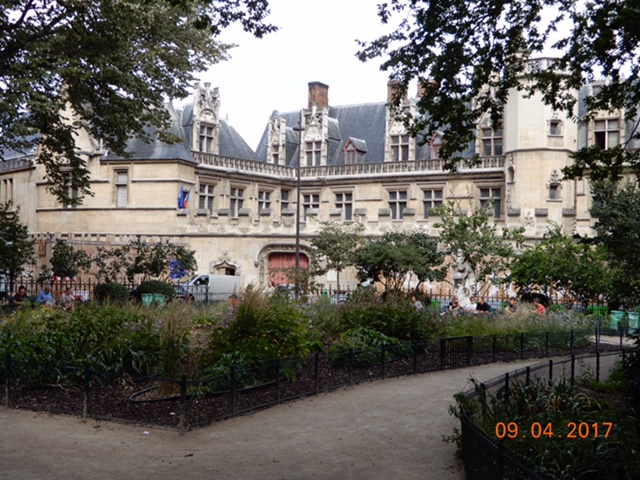
The Cluny Museum is a former Paris home of a 16th Century Abbot of Cluny. It is undergoing a massive restoration project but was still open to visitors. Somehow, despite all our visits here, we managed to miss this museum.


The museum is the repository of medieval collections. My main interest in finally visiting this museum was to see the six tapestries entitled The Lady and the Unicorn. These are huge wall-hanging tapestries woven in the 1500s in what, at the time, were tapestry factories. They have as a focal point an aristocrat lady, a lion and a unicorn. The background is called the millefleurs style – a popular background filled with lots of varying flowers. I don’t know if the tapestries are famous because they have survived 500+ years or because they are so beautiful and their meaning so enigmatic, but I have known of their existence for decades. Five of the six tapestries are supposed to represent the five senses while the sixth’s meaning is speculative. Regardless of their meaning they are beautiful and I was so pleased to finally see them.
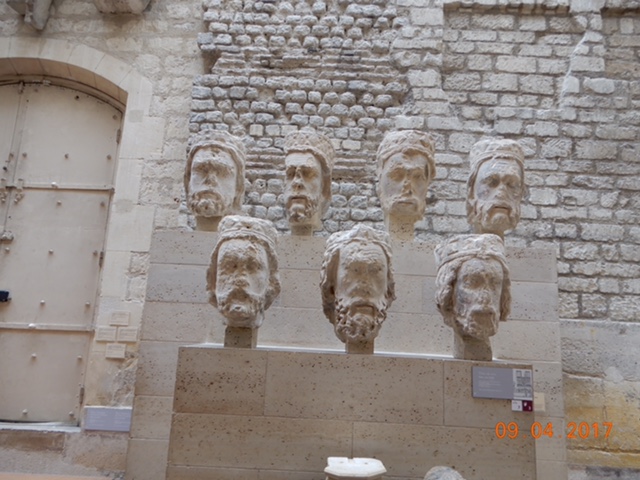
The Cluny also has the Gallery of Kings; 21 carved heads of the Kings of Judah, that once decorated Notre Dame but were pulled down during the revolution because they were thought to represent French kings. They were buried in rubble and only rediscovered in 1977. Other collections we saw included funerary sculptures, gold religious objects, choir stalls, and stained glass windows, but the Lady and the Unicorn won the prize.
Two other sights we overlooked were the Sorbonne and the Pantheon. The Sorbonne is the historic house of the University of Paris. The university was founded in 1257 on the Left Bank and was historically famous for protests, right up to current times. We had walked the Left Bank innumerable times but never quite got to the university.
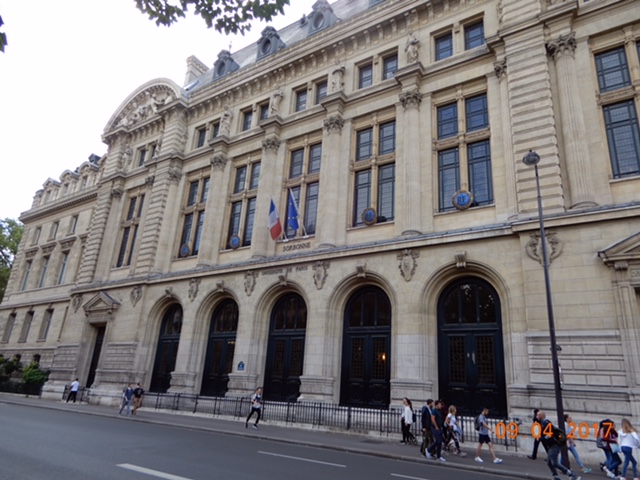
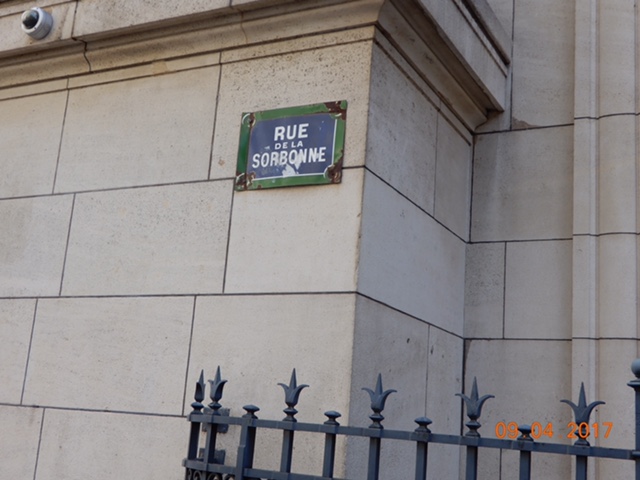
In our search for the Pantheon we walked right into the university district and finally saw the university building itself along with a lot of students.
We continued walking the hilly neighbourhood when we entered an open space, obviously a square of some sort. Looking to our right we saw a handsome boulevard stretching down towards the Eiffel Tower. Looking to our left was… ta-da! the Pantheon.
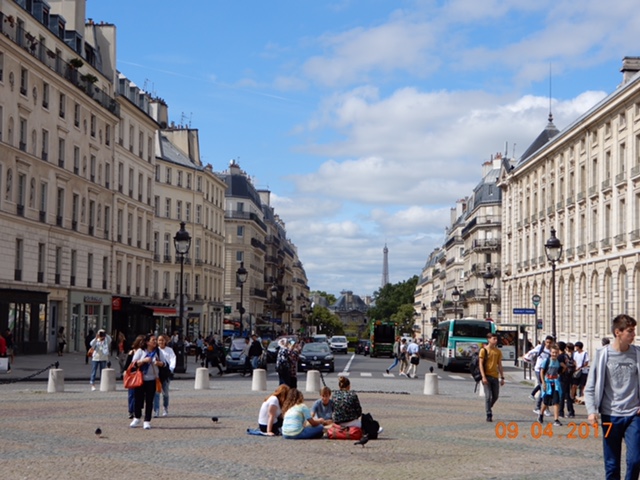
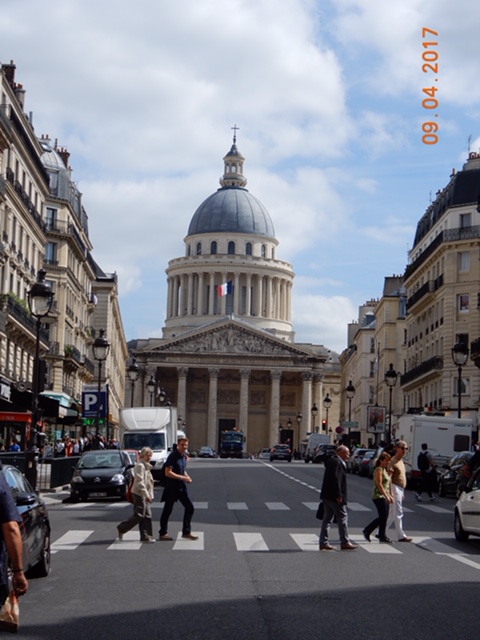
The Pantheon was conceived in 1755(ish) by King Louis XV who, upon recovering from a serious illness, swore to build a church to honor St. Genevieve, the patron saint of Paris. It was to house her relics. After several delays it was completed in 1790 just in time for the French Revolution to decide that it should not be a church at all, but instead become a mausoleum for famous French intellectuals.
Among those buried there are Voltaire, Rousseau, Victor Hugo, Émile Zola, Jean Moulin, Louis Braille and its architect, Soufflot.
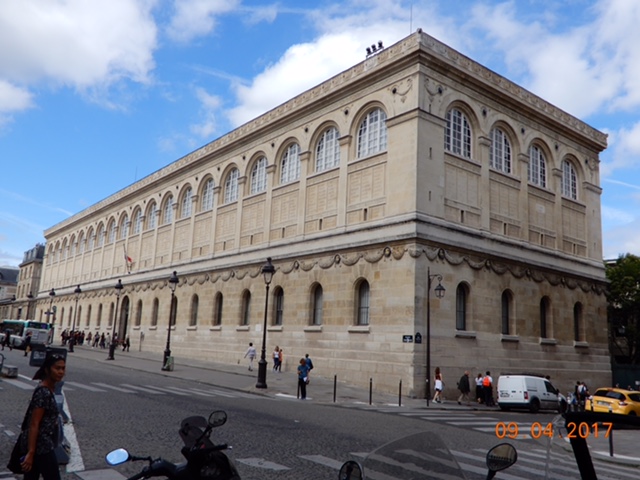
Just across a street from the Pantheon is the Bibliotheca St. Genevieve, a university library with 810 names of illustrious scholars inscribed on the exterior. The library contains over 2 million documents and its second story reading room is supposed to be an architectural marvel. I tried to get in to see it, but was denied entry. I guess you must have student or faculty identity cards to get in.
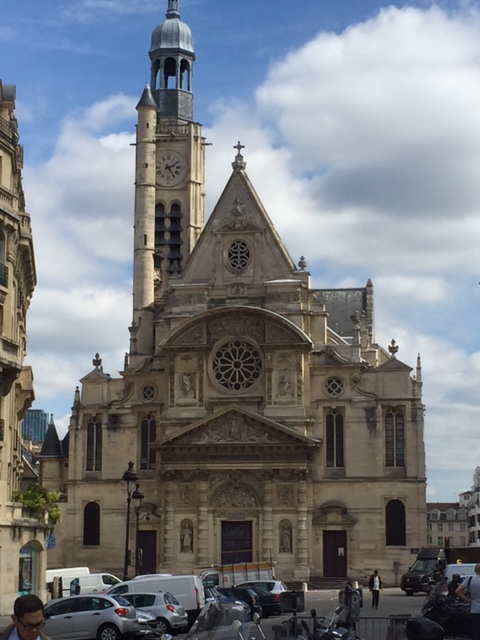
Behind the library and the Pantheon is St. Etienne du Mont. The church we see today was remodeled in various stages beginning in 1492 and being completed in 1640. It has had a pretty illustrious career and now holds St. Genevieve’s remains. According to what we hear the interior is well worth a visit but the church was lock up tight as a drum when we tried.
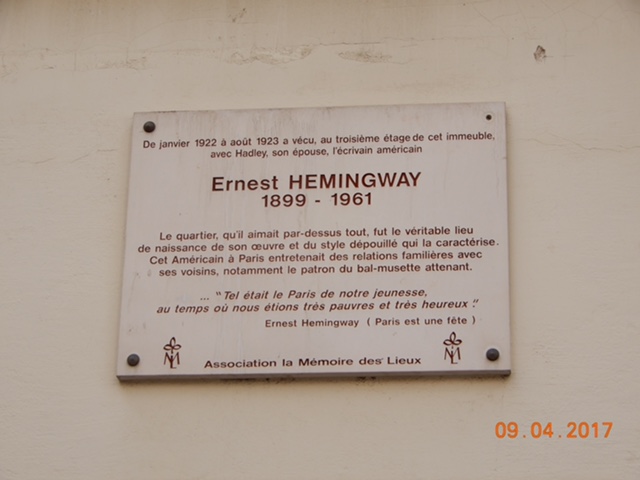
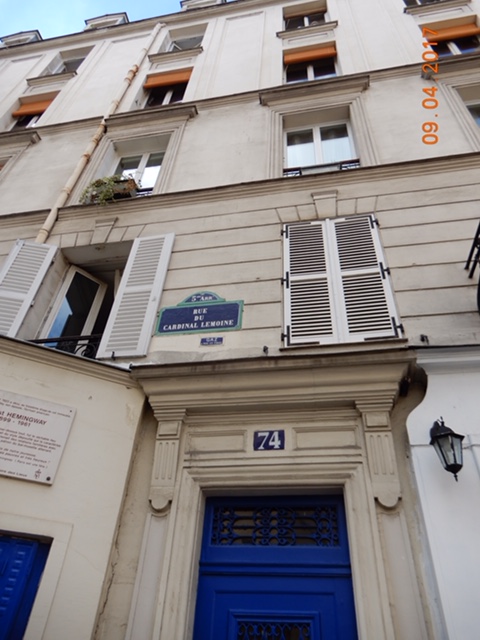
Not too far from these sites was the flat Ernest Hemingway lived in when he first came to Paris as a 22 year old. It is at 74 Rue Cardinal Lemoine and we determined to begin a Hemingway quest. By this time it was getting later in the day and we were both tired. We kept getting lost as we walked up and down a hilly maze looking for one very short street. Eventually we found it, but its lustre was dulled by our irritation with one another. We decided to continue the Hemingway quest another day when we weren’t so tired.
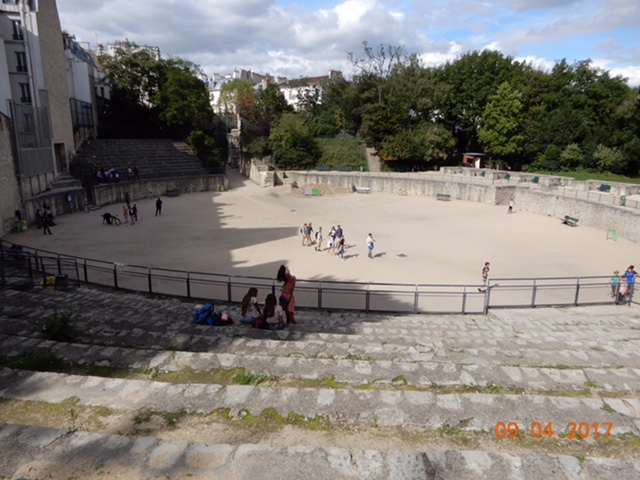
As we began our search for a metro station we saw that Paris had the remains of a Roman amphitheater not too far off our route. We made a quick detour to take a photo opp and watched people actually using the amphitheater. Old men were playing pétanque and youngsters were kicking a soccer ball around. Usually the amphitheaters we have seen are designated historical sites and are off limits to actual use. It was pretty cool to see this one being respectfully used.
Finally we made it to our metro stop and took it Port Maillot where we were supposed to pick up the campsite bus at 4:45. We arrived early and joined other campers waiting to return to the campsite. The bus was scheduled to come every 30 minutes on the quarter hour, but it didn’t come. And it didn’t come at 5:15. At 5:27 I called the camping (extremely surprised my phone actually worked for something besides data usage) and learned that today was the day they had changed bus schedules and the first bus would not arrive until 5:45. At least we only had 20 more minutes to wait, but some of our fellow campers had been waiting over 2 hours by the time the bus came to pick us up. We were really finished with the day by the time we reached our campsite.
 Bruce N' Peg