Edinburgh

7/6/17 – Edinburgh

IMG_0520

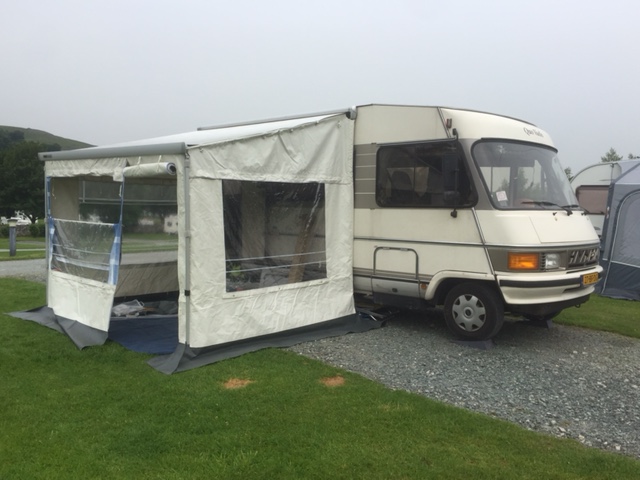
Upon our arrival at Mortonhall, and since we were staying for several days, we decided to put up our awning room. It was the first time we had an opportunity to erect it since we bought it. We were a little nervous about remembering how to do it, but while we were slow, we succeeded.
 

IMG_0538
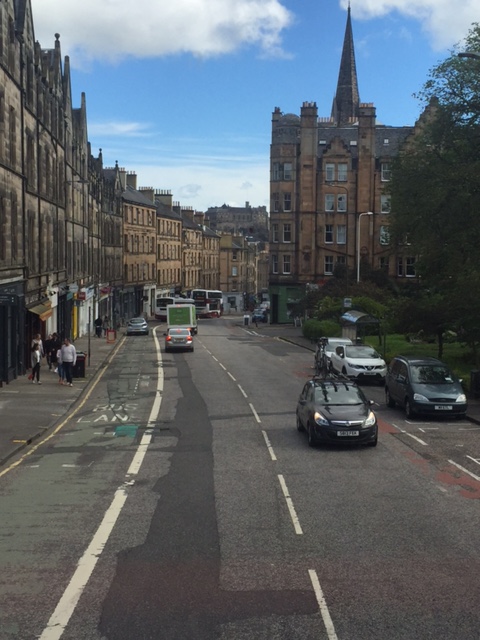
Unveiling of Edinburgh
IMG_0537
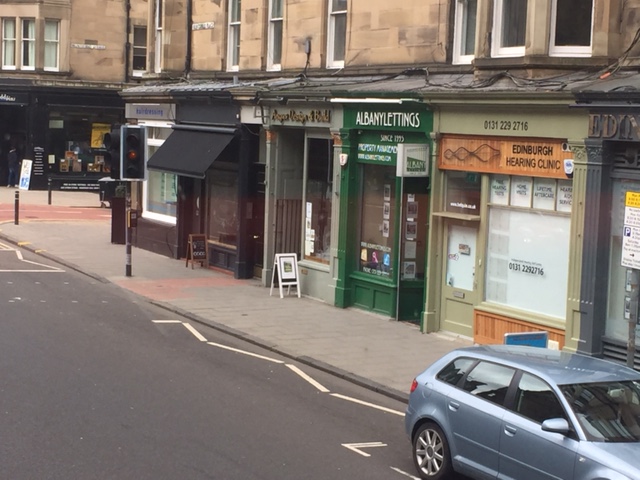
Tiny shops

Thursday we took bus number 11 out of Mortonhall and a twenty minute ride took us into our “hidden” city of Edinburgh. The city slowly revealed itself to us along the route climaxing with the dominating view of Edinburgh Castle up on Castle Rock.
We got off the bus.


And walked around the rock slowly making our way up to the castle itself. We were blown away by the rock on which the castle stands. It is the remains of an extinct volcano made of a type of very hard basalt rock that resists erosion. Rocky cliffs protect three sides of the castle and it was a nearly perfect defensive location to build a castle. As we walked around the Rock we ogled the cliffs making jokes about attackers failing to scale the cliffs. We later learned that in the 1300s, soldiers loyal to Robert the Bruce did successfully scale the cliffs and defeat the English who were holding the castle. Edinburgh Castle lays claim to being the most besieged castle in Great Britain with 26 sieges in its 1100 year history.


The castle grounds were fabulous with many sandstone buildings, round towers, cobbled walkways, the oldest building in Edinburgh: 12th Century St. Mary’s Chapel, the Scottish Crown Jewels and the magnificent Scottish National War Museum.


At one pm everyday, a really big, really loud cannon is shot off to the delight of visiting crowds, allowing citizens to check the accuracy of their watches and clocks – a tradition dating back 150 years for ships in the harbor to adjust their chronometers.


We walked part of the Royal Mile, the succession of streets running from the Castle to Hollyrood Palace (the official residence of the Queen – who happened to be in town and no, we didn’t get to have tea with her) but took a sharp left down the hill towards Princes Street where we found lunch at a Kebab shop. It is said these two streets are the busiest tourist streets in all of Edinburgh and boy, were they!


Friday we visited the Royal Brittania, the last royal yacht in service to the British monarch. It was decommissioned in 1997 after 43 years of service in a ceremony that I bet broke the Queen’s heart.
Entry fee included an excellent audio tour. It explained the history of the ship as well as how the crew and the Royal Family lived while aboard. It was very luxurious and yet comfortable at the same time. I read somewhere the Queen felt the Brittania was the only place she could really relax.
The ship is located at Ocean Terminal – a one hour bus ride from our campsite (we sat upstairs on the double decker bus and received a great tour of the city). We expected it to be on a dock much like the Queen Mary in Long Beach, CA or the USS Midway in San Diego, CA but instead access was through a huge shopping mall. Our first stop was H&M. A couple of tops later we proceeded onward to the ship.
We are realizing that – much to our chagrin – we no longer have the stamina to put in 8-9-hour days of sightseeing. 5-6 hours is about our max so the Royal Brittania was our exclusive event for the day.

Saturday, our last in Edinburgh was filled with a walkabout. We wanted to see Sherlock Holmes, Greyfriars Bobby, more of the Royal Mile and Princes Gardens.


Returning from the Brittania yesterday we saw a pub named the Conan Doyle. Sir Arthur Conan Doyle was the author of Sherlock Holmes. We had been on the bus and missed the photo shot of the pub so we decided to return. A little research determined the pub was very near to where Sir Arthur was born and a little more research pointed us to a statue of Sherlock Holmes marking the birth spot.

Our next project was to find Greyfriars Bobby. This was a little terrier whose master died in the 1880s. Bobby held vigil at the grave for 14 years earning the respect and admiration of all who tried to chase him away. On his death he was buried in Greyfriars cemetery near his master. A statue of the dog commemorates his loyalty.


Following our tourist map was a bit tricky and as we navigated our way to Bobby, we came across Grassmarket a historic market place and current open air market. It has the oldest pub in Edinburgh, the White Hart Inn, and was notorious for daily hangings up to the 18th century. Passing by we walked down Candlemakers Way and into the entrance of Greyfriars Church with its large graveyard of weather beaten tombstones.


One newer marker was Bobby’s but we saw no statue. I was greatly disappointed; we split up to search better but with no success. I returned to the displayed map and finally saw that the memorial was outside the church walls. The statue was in front of a nicely appointed pub named Greyfriars Bobby. Once found, we waited our turn while a tour group of Italian teenagers got their photos with the pooch.


We began walking uphill towards the Royal Mile and suddenly we came across The Elephant House – the very tea and coffee shop where J.K. Rowlings wrote the first couple of Harry Potter books. That was a welcome surprise!
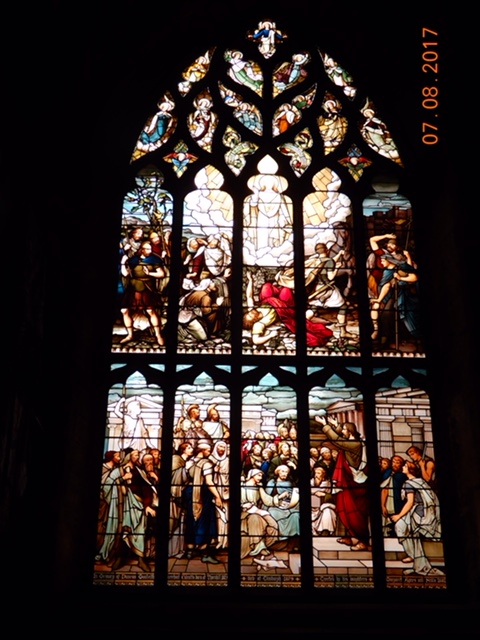
DSCN1600DSCN1588DSCN1587

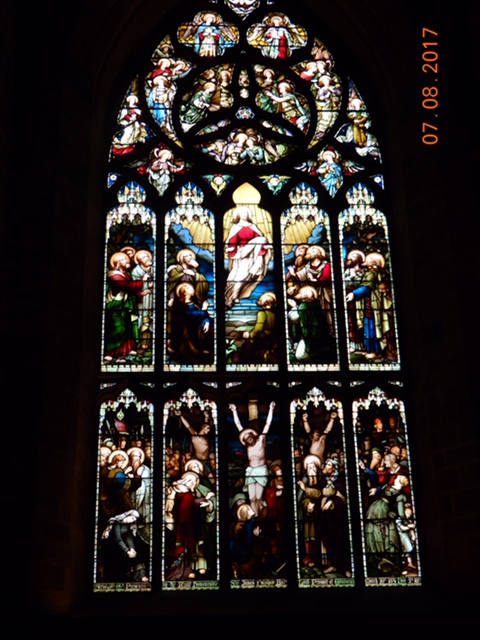
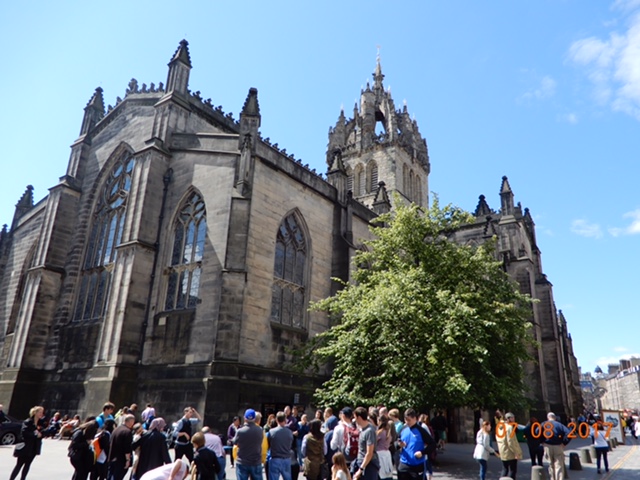
Reaching the Royal Mile we detoured into St. Giles church at Parliament Square, just in time to listen to a choral concert and take photos of the lovely stained glass windows. We decided not to visit Holyrood Palace – which was just as well since it was closed due to the Queen’s presence – and walked down to the Scott Monument, honoring Sir Walter Scott. The prolific author is obviously held in high regard; the monument is the largest monument to a writer in the world.
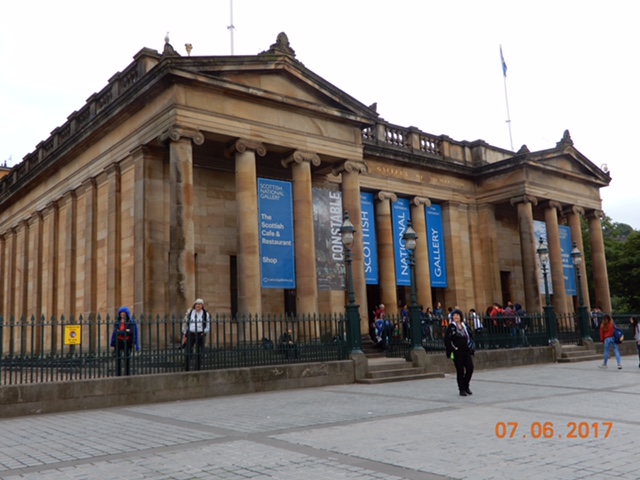
DSCN1519

We walked the Princes Gardens and right into the Scottish National Gallery, a splendid neo-classic building with an impressive collection of great works by Scottish and foreign artists. I love me an art museum and if it hadn’t the last stop in a long day I would have stayed for a longer time. At it was, I saw paintings by John Constable, Raphael and Leonardo, among others.
Finally, we hopped on our bus #11 and returned to the camping where we took down the awning room in preparation for Sunday’s departure.

Our new found German friends from St. Andrews, Ingrid and Hans, were staying in the same campground. After our respective dinners we got together and spent a couple of hours chatting and sharing travel stories.

We love visiting the great cities of the world and Edinburgh definitely belongs in that category. Our three days were packed with attractions and we just scratched the surface. With more time and knowledge we would have covered more ground and enjoyed it on an even deeper level.

The Home of Golf

7/5/17 St. Andrews

Having crossed the border into Scotland, we had two places on the top of list of places to see: Edinburgh and St. Andrews. While it has never held much fascination for us, we know people who love the game of golf. Having come so far, there was no way we were not going to visit St. Andrews.
St. Andrews is consider the “home of golf” because it was being played there as far back as the early 1400s. It is also home to a university that goes back even further than its golfing origins.

We arrived in the late morning and were able to park right across from the links course.


I want to tell you… this place radiated reverence. I am not a fan of golf – except to watch on tv when nothing else is on – and yet there was something about being on a golf course that is 500+ years old that got to us. It was like being in one of the architecturally awe-inspiring cathedrals we are so nuts about. We are known for our enthusiasm (how is that for a euphemism for animatedly loud?) but we walked around the links as though we were in a church.
There were lots of players on the courses. We wondered; were they feeling as reverential as we two non players?

FullSizeRenderIMG_1571


As we walked around the Old Course we found the landmark stone Swilcan Bridge at the 18th hole, whose backdrop was the The Royal and Ancient Golf Club of St. Andrews Clubhouse. A dignified stone building built in 1854, it is a members only club that didn’t allow women members until 2015. Since I don’t play golf, I’ll refrain from commenting.

17F7C871-38AF-440D-B760-18718DB3B739IMG_1569

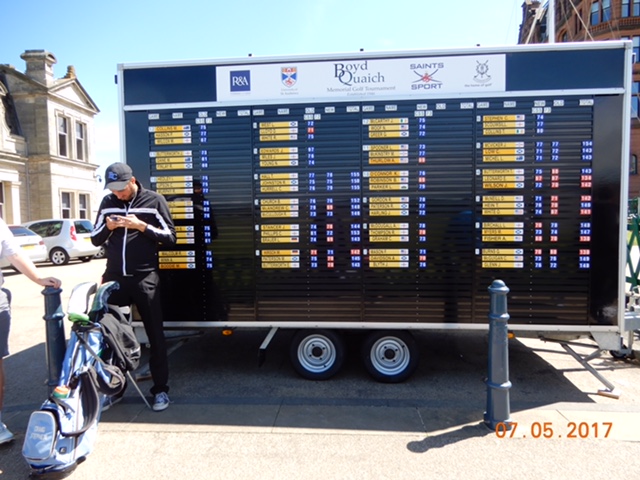
There was a memorial tournament going on with American golfers joining an international cast, and at the public clubhouse and in town there were scores of souvenir stores selling all things related to golf.
We returned to the van and met a German couple Hans and Ingrid who are touring Scotland for a bit. While in Perth, they received a ticket for parking in an area that did not allow camping vans. They needed some help with translating the ticket and asked if we could help. It was a hefty penalty – £60 but if they paid it quickly – in person, by check or online – it would be reduced by half. They were no longer in Perth and their wifi connection wouldn’t work, so we offered to help and using my iPhone we were able to get their payment sent off.
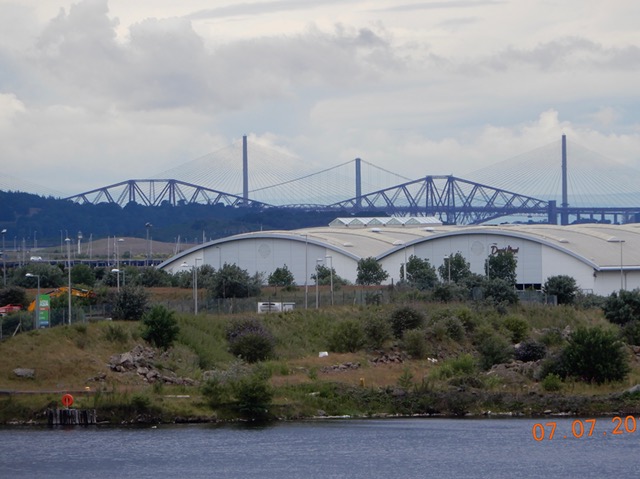
On our return we re-crossed the Firth of Forth – another name I’ve heard forever. Firth means estuary, Forth is the river = Estuary of the Forth River as it empties into the North Sea.

FullSizeRender
The three bridges crossing the Firth of Forth. Taken from Ocean Terminal.

Three bridges cross the Forth there;
The old cantilevered iron railway bridge built in 1882 at the height of railroad power, is considered a symbol of Scotland AND its a UNESCO world heritage site;
The Forth Road Bridge is a twin-towered suspension bridge erected in 1964 to carry road traffic. It modernized the centuries-old ferry system, previously used to transverse the river. What struck me was the idea that in the 20th century ferries were still the only way for people and vehicles to cross the 1.5 mile expanse. I think the bridge was badly needed.
Our travel mentors – Robin and Alimay have a direct connection to the Forth Road Bridge: Robin’s father was largely responsible for its design.
I wish I had taken a better photo of it, but as we crossed I was entranced by the Iron Bridge on our left, as well as the new soon-to-be-opened Queensferry Bridge on our right.
As we drove towards Edinburgh we kept remarking how the city (at least the old city, including the castle) was hidden from us. Greenery and housing developments blocked any chance of seeing the city. Even as we reached our camping – Mortonhall – we would never has suspected we were on the outskirts of a major city, we could have been in any one of the small towns we have driven through.


Traveling Day

7/4/2017 – Travel Day
Monday was a travel day. We were going to another country. We left Durham and followed the coast north to Gateshead, a suburb of Newcastle on Tyne, where we visited the Angel of the North. Along with the photo, here are some interesting facts about the sculpture:

01A5C33E-8290-4BA9-B232-F5AD09639999

• It is believed to be the largest angel sculpture in the world
• It is one of the most viewed pieces of art in the world – seen by more than one person every second, 90,000 every day or 33 million every year (that’s because it is right off a busy highway – ph)
• It is one of the most famous artworks in the region – almost two thirds of people in the North East had already heard of the Angel of the North before it was built
• Its 54 meter (175 foot) wingspan is bigger than a Boeing 757 or 767 jet and almost the same as a Jumbo jet
• It is 20 meters (65 feet) high – the height of a five story building or four double decker buses
• It weighs 200 tonnes – the body 100 tonnes and the wings 50 tonnes each
• There is enough steel in it to make 16 double decker buses or four Chieftain tanks
• It will last for more than 100 years
• It will withstand winds of more than 100 miles per hour
• Below the sculpture, massive concrete piles 20 meters deep will anchor it to the solid rock beneath
• It is made of weather resistant Cor-ten steel, containing a small amount of copper, which forms a patina on the surface that mellows with age
• Huge sections of the Angel – up to six meters wide and 25 meters long – were transported to the site by lorry with a police escort
• The total cost of The Angel of the North was £800,000
• There is unique species of daffodil named the Angel of the North due to its orange, rusty hue and lofty height. The Angel of the North daffodil has been verified and registered with the Royal Horticultural Society (RHS)

579646B9-BA75-4245-9345-41FD54D11FFB

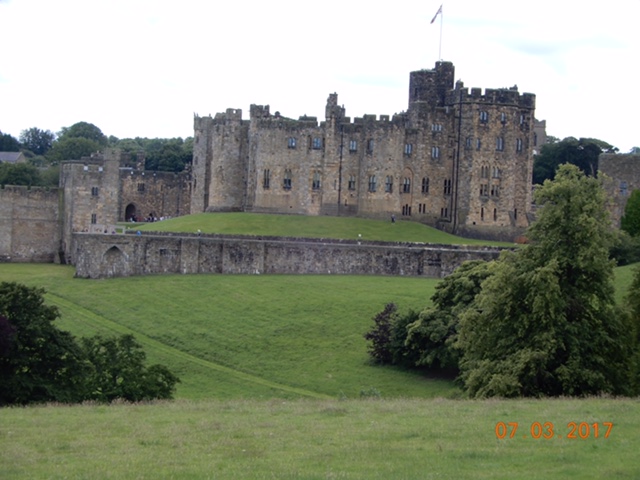
Our next stop was Alnwick castle, home of the Dukes of Northumberland, the Percy family, who have owned the castle since the 1300s. Harry Potter fans would have recognized parts of the castle as Hogwarts in the first 2 films.

I had the inaccurate idea that the castle was set apart from the town of Alnwick and we would have easy access to it. Once again I was wrong, the town has grown up around the castle and, quite like Winchester, we were unable to find parking space to visit it or the castle. We had to settle for camera shots of the castle outside the town. At least our photos helped me understand why I thought the castle was out in the open: the grounds on the back side of the castle walls are wide open meadows. Evidently what photos I’ve seen of the castle (minus H.P. shots) were taken from this viewpoint.
Before we reached our camping at Berwick on the Tweed we tried one more side trip to the Holy Island at Lindisfarne. A long, narrow causeway, twice daily covered by tides, separates the tip of the land from the mainland. Once upon a time an abbey stood there and St. Aidan and St. Cuthbert were among its bishops. It was finally abandoned in 875AD due to constant Viking raids. We drove along the causeway reading signs warning us of impending doom should the tides rush in. Upon reaching the end we turned into a packed parking lot and saw nothing of interest except lots of buildings under scaffolding. We have seen our fair share of scaffolding so we turned around and raced back to beat the tide. At least we can say we were on the Holy Island.
We arrived at the camping and our pitch had a great view of the river Tweed estuary. I think the Tweed was once the border between Scotland and England although now the border is a couple of miles north of the river.

We have a mini itinerary for Scotland, but as we have well demonstrated, it is not to be trusted.
We will stay in the lowlands and visit Edinburgh for 3-4 days, 1 day at St. Andrews, then Sterling, through Glasgow and south to to the coastal castle of Culzean. We will continue southeast through Dumfries and back into Britain proper.
Our timing is such that, with much regret, we are going to bypass Ireland this trip. We cannot do it justice in the short time we have left before returning to the continent. We haven’t yet seen southwest Britain – a must in our book – and while it has been 17 years since our visit, we did cover Ireland pretty well.


Durham Cathedral

7/2/17 – Durham

Sunday we saw the most exquisite Norman cathedral and we don’t have one interior photo to share.
We left Robin Hoods Bay in the morning and drove to Durham, famous for its UNESCO World Heritage cathedral and castle complex occupying a rocky peninsula jutting into the river Wear.
The first church to stand on the peninsula was built in the 700s AD to house a St. Cuthbert’s remains.
The present cathedral, dating from about 1100AD holds the Shrine of St. Cuthbert, and more interesting to me, the remains of the Venerable Bede who wrote the “Ecclesiastical History of the English People” in about 731AD.
The book was a history of both England and Christianity up to that point and has been an important reference for later historians. I haven’t read his book but I have read many books and listened to many historical podcasts that refer to him and his book.

The cathedral has an interesting 900 year history but we were really enthralled by the architecture both inside and out. We got to see the stained glass rose window with sunlight streaming through it – it was breathtaking. I have seen many cathedral rose windows but I can’t recall ever seeing one when the sun was out and the glass was lit up in all its glory. (That just goes to show how often days in Northern Europe are overcast and/or rainy.) Huge round columns holding up the stone roof were carved with chevrons and Xs decorating the columns in a unique way.
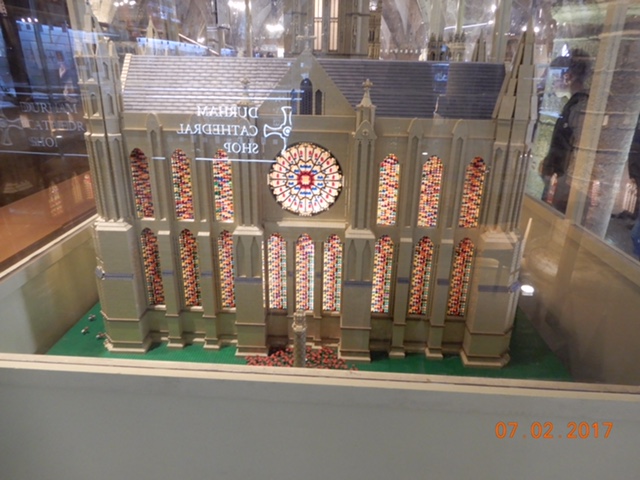
The service Evensong was underway while we were there so we did not tarry. Instead we made our way past the cloisters to the undercroft where a Lego model of the cathedral had been constructed using 299,128 Lego blocks. It is an ongoing fundraiser with each block representing 1£.

16BE1F34-6E6E-4507-ADB6-9B35C8E88C4D
There were all sorts of photo-worthy architectural features at the cathedral and we were not allowed to take photos. It wasn’t until I got on line to look for interior shots that I learned I might have been able to purchase a photography pass. I am giving credit where credit is due to the two interior photos I found: paradoxplace.com has some beautiful photos of the cathedral.

Railways, Vikings and Robin Hoods Bay

6/29/17 – National Railway Museum and Jorvik Viking Experience

I must be honest and say we don’t have a great fascination for trains. We grew up after the train era in the U.S. and we grew up in California where the automobile is king. Trains were never on our radar but it was suggested to us repeatedly that we should visit the railway museum while in York – and it was free, so why not?


The museum was about a twenty minute walk from the Rowentree camping site and very near the city’s rail station. We walked into an overwhelming display of locomotives, over 200 years of royal Pullman cars and a warehouse full of 750,000 railroad items, from monogrammed chinaware to crossing signs to model trains to street lamps; all the sort to make any train enthusiast weep for joy.
Locomotives traced the history of railroads from the first primitive steam engines to the worlds fastest, and the transition to diesel and then electric powered engines. Several royal cars -used by kings and queens when the railroads were in their prime – were displayed in all their opulence; even their servants rode the rails in relative luxury.
Along with perhaps 30 steam and diesel locomotives, a Japanese bullet train was in the collection as well as a working turntable. If one were so inclined, a crash course in the British rail system was at hand.
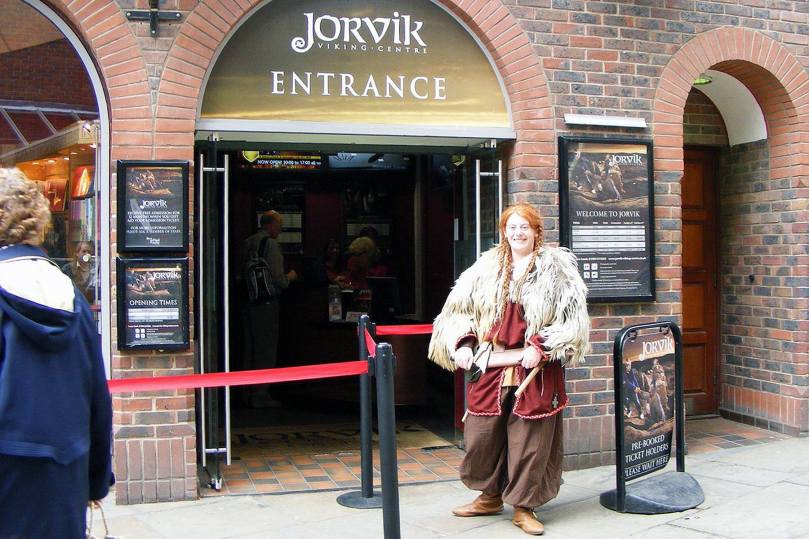
We spent about two hours at the museum then walked back into town to do the Jorvik Viking Experience.
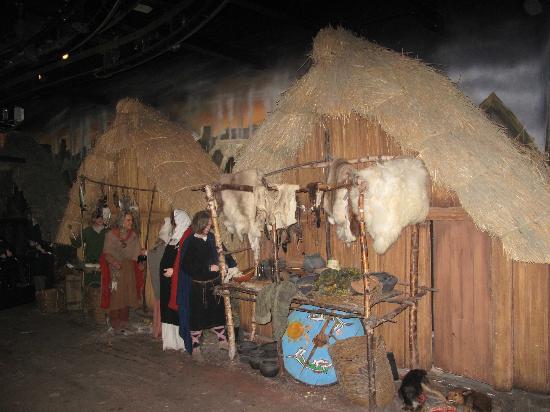
In the 900s AD the Vikings (Anglo-Scandinavians is the new terminology) ruled York, calling it Jorvik (I think their name eventually evolved into ‘York’). In the 1970s an archeological dig stumbled onto the remains of a pretty sophisticated Viking village dating back to pre-Norman conquest. Eventually the archeologists recovered enough artifacts to be able to piece together the village and guesstimate how the people lived and worked.

IMG_1380IMG_1381

It was decided to share this knowledge with the public and the Jorvik Viking Experience was born. A Disney-type ride takes you through the recreated village with animatronic people and animals going about their daily lives. After the ride you visit galleries with some of the recovered 1,000 year old finds on display. I think it is a great introduction to both history and archeology.

7/1/2017 Robin Hoods Bay & Whitby

We left York Friday morning and after a little grocery shopping at Lidl – my favorite grocery store – we drove to Robin Hoods Bay on the east coast. (Once again our drive was an exhausting 30 miles – lol)
We have visited Robin Hoods Bay before, and our real purpose was to revisit nearby Whitby for (more) fish and chips, but the closest camping with facilities was at Robin Hoods Bay.
Robin Hoods Bay was once a smugglers outpost (and who knows, it may still be). The village flows down a steep hillside with a rabbits warren of narrow alleyways the smugglers used to move their contraband around the village and away from the authorities. Today is seems to make a living exploiting its romantic past.
It is adorable.
After settling in we hiked from the campground to Robin Hoods Bay via the North Yorkshire National Trail, dropping into the bottom of the town at the very base of the cliffs. The east coast is facing the North Sea and we came out onto the cobbled boat launch that led to the sea.


The fun thing for us to do is to wander the town and the convoluted alleyways. We can’t get lost, but only because the town is so small, eventually we will find our way back to the one main road that goes through it. I mention the town is perched on a steep hillside; over the years stepped walkways were built making those steep hikes up and down a lot more bearable.


IMG_1384DSCN1285
While down at the base of the town we watch a small group of people walking down the hill and towards the sea. They did some sort of little ritual and stuck their feet in the water. They were looking very pleased with themselves so we asked them “wazzup?” It turns out Robin Hoods Bay is the end of the Coast to Coast Walk, a 192 mile walk across England starting at St Bees, on west coast and ending here. It took them 13 days and crossed the Lake District, the Yorkshire Dales and the North Yorkshire Moors. Wow – what a walkabout. (Joel and Louise; think we four should try that?)

After wandering through the town, taking photo after photo trying to capture the town’s charm for you, dear reader, Bruce found a small fish and chips shop and we took some home for dinner. I gotta tell ya, by the time we get out of the U.K. I am going to be as tired of fish and chips as I was of bratwurst while in Germany on previous trips.
Saturday elevenish we walked to the bus stop to take the bus into Whitby, about 5 miles away. We thought about walking but reviews of the coastal path implied pretty rugged going and 3 hours, so we opted for the bus. As we waited three other couples joined us. While we waited we chatted a little bit, nothing serious. We waited and waited; we kept looking at the posted schedule, knowing we had missed one bus by minutes but the second bus was quite late. Finally, after a good half hour, we saw the bus approaching only to watch it pass us by without even slowing down. It was obviously full but we had been waiting for a long time so we were quite chagrined. The three couples, who were together, decided to go to a pub but we decided to wait for the next bus. The next thing we knew, a car pulled up and it was one of the couples – they had all decided to drive to Whitby and offered to take us with them. We eagerly accepted and had a good time chatting it up with them.
Once arrived at Whitby, we made a beeline to Trenchers, a restaurant known for its (wait for it…) fish and chips. As we waited we saw a four seat table opening up and invited the couple behind us to share the table. That too was a delightful experience; sharing a fish and chip lunch with Pete and Pauline from Nottinghamshire.

Whitby is a fishing town that grew around the estuary of the river Esk with a naturally protected harbor. It must have more fish and chip takeaways and restaurants than anywhere else in the world! It has a long history dating back to the Saxons and Vikings. The 18th and 19th centuries saw it develop into an industrial port and a shipbuilding town, as well as a whaling center.

Whitby is known for the black fossilized wood turned gemstone – jet – mined locally. Whitby Jet was popularized when Queen Victoria wore is as mourning jewelry. Today scores of jewelry stores sell it in all sorts of settings.
Captain Cook, the 17th century explorer – who was killed in Hawaii by angry natives – was apprenticed here to a shipping firm.
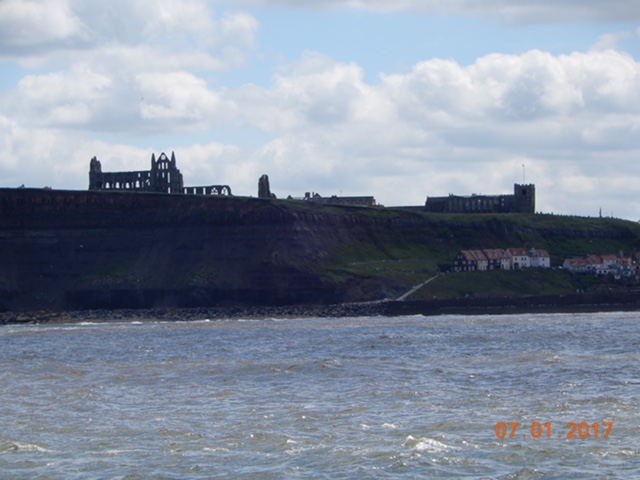
The ruined Whitby Abbey looms above the town, its stark silhouette still used by mariners as a landmark. To reach the top of the cliff where the Abbey and the parish church St. Mary’s stands, 199 very popular, very well used steps were built.
Literary (and movie) buffs will remember that Bram Stoker’s Dracula made landfall at Whitby and began the eery story that has held a fascination to millions for over 100 years.


DSCN1313
We joined a horde of tourists wandering the cobblestone streets, walking from one point of interest to another. Everywhere we turned people were eating fish an chips and seagulls were flying overhead hoping to steal a carelessly dropped chip.

IMG_1499
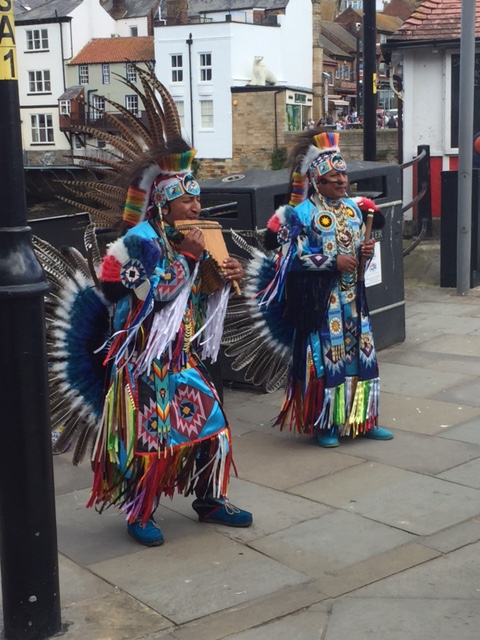
We finally found our Peruvians! When we last visited Europe we were convinced a group of Peruvian entertainers were following us from city to city. Everywhere we went we heard the lovely music of pan pipes (which after a while became like the bratwurst and fish and chips). They showed up in Whitby dressed in full tradition attire. We actually enjoyed seeing them.


Bruce loves Buskers (street entertainers) and always takes photos of them. (Peggy always makes him pay for the photo. If you know Bruce, you know he is a tightwad, so he begrudgingly digs in his pocket and finds the smallest coin Peg will allow.) Two very good ones were working the square and B got his obligatory photos.

DSCN1304

We took a short half hour boat cruise out into the bay and saw a different perspective of the town from the sea. It was a bit choppy so all our photos were either of the sky or the water. We deleted them. We met an Australian couple on a two month holiday and chatted them up for most of the ride.
By then it was late afternoon so we decided to find the elusive bus that would return us to Robin Hoods Bay. This time it showed up at the station right on time and we had an uneventful return to our camping.

York Minster

6/27/2017 Tuesday – York Minster

This city is a historian’s dream. It has 2000 years of documented history and an even longer archeological history. Celtic tribes occupied land where the rivers Ouse and Foss join. Then the Romans conquered the tribes. Then the Saxons took over. Then the Vikings conquered the Saxons. Then the Normans conquered everyone and they evolved into the present day British. Each contributed to the city, often building over or incorporating the previous occupants’ living areas.

One place where we can see evidence of that history – at least back to the Romans – is the York Minster. The land on which the church rests was an important location. The Romans built a fortress there whose foundations can be seen in the Cathedral undercroft. The Christians built their first wooden church there in 627AD and shortly after that the first stone church was built. After the Normans came, the first large cathedral was built in the Norman architectural style. One hundred years later Gothic architecture became the rage for churches and in 1220 the cathedral we see today was begun.


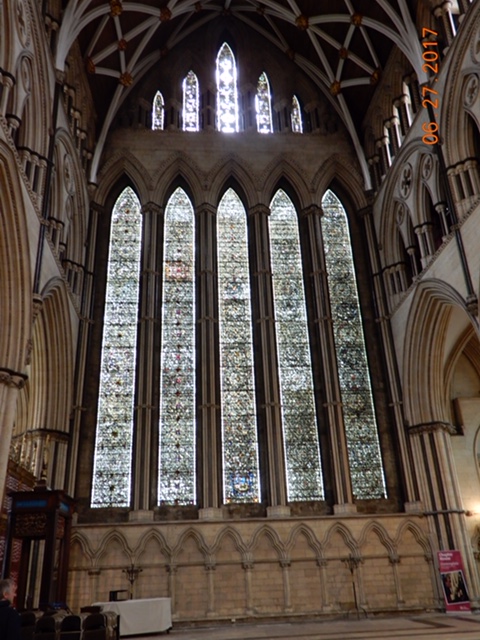
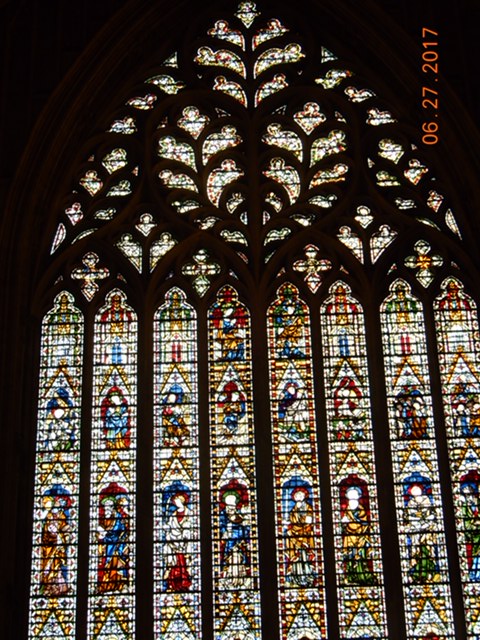
The York Minster dominates the skyline in York. It is the second largest Gothic Cathedral in Northern Europe (Cologne Cathedral is first). It is famous for its stained glass windows. The 76 foot tall Great East Window is the largest medieval stained glass window in the world. All four sides of the minster have windows of note. The south has a Rose Window. The West has the Heart of York window, the north has the Five Sisters – 5 lancets reaching up 50 feet.

7C4F3761-4A95-4F5B-B139-312017E20339
Five Sisters
3896CE75-ED70-43B7-B181-217F18B9FEEA
The Great East Window
EE263966-E085-4703-BF07-E49F91B4AD4A
Heart of York
DSCN1254
Rose Window


Fifteen stone statues representing 15 English kings make up the choir screen separating the choir (quire) from the nave. The kings begin with William the Conqueror and end with Henry VI.

DSCN1240DSCN1251

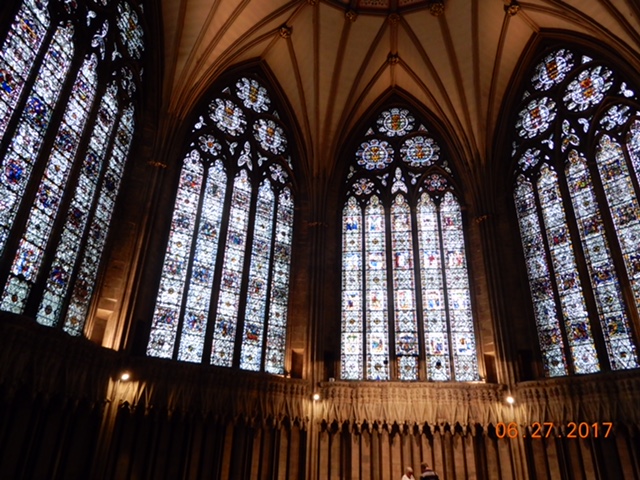
The Chapter House – the meeting place for cathedrals – is octagonal shaped and surrounded by still more stained glass windows, giving it a light and airy feel.
It costs £21,000 a DAY to maintain the Minster. An 800 year old building needs a lot of help to maintain its physical integrity, we gladly paid the £8.25 entry fee (which by the way, is good for a year, so if anyone reading this plans to visit York in the next year, look us up we have the tickets).
Some of that money goes toward restoring the stained glass windows. The artists and craftsmen are currently working on the Great East Window. While the lower ¾ of the window had been completed, parts of the upper window had clear glass wrapped in the lead outlines awaiting the restored pieces to be reinstalled.

Beneath all of this is the crypt and the undercroft. I missed the crypt, being too wrapped up in reading every word posted in the church, but I did get to the undercroft where the history of the land was displayed. The Minster sits above the old roman fortress whose remains were discovered in early 2000s during an engineering project to re-enforce the main tower above.
This fortress is where Constantine the Great was elected emperor by his soldiers and from here went on the create Constantinople and make Christianity the religion of the Roman world.
All told, it was pretty nifty.
We left the minster to find a bite to eat and wander the streets some more before returning to the camping. We were on the lookout for a red devil, a golden bible and Minerva, goddess of wisdom, plus any cats we might find on the “cat trail.” The Devil, the goddess and the Bible originally represented store types; Minerva and the book used to be above book stores while the Devil represented a printer’s shop. The cats were just for fun.

Wednesday we were supposed to visit the Rail Museum but it rained all day and we stayed “home” hoping it would stop. It didn’t, so we extended our stay in York one more day to visit the museum on Thursday.


York

6/26/17 – York

Saturday morning, we left River Laver Holiday Park – our camping for Fountains Abbey. I have to say; it was an immaculate campground. It only had 10 spaces for touring caravans and motorhomes, its stock and trade is selling static caravans (park model trailers in US), but the park facilities and grounds were impeccable.
On our way to York from Ripon – a whole 41 miles – we missed a Roman site outside of Aldborough. We are greatly attracted to Roman ruins and ancient churches so this was a disappointment. As we continued along, Bruce spotted a road sign directing us to turn right to visit an “ancient church.”

DSCN1056
Ancient Church at Kirk Hammerton
DSCN1058
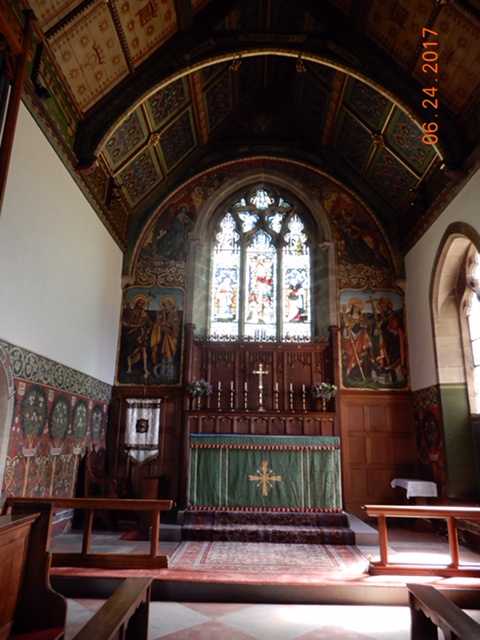
The Apse in Ancient Church

We drove a couple of miles down the requisite1-1/2 lane-wide roads until we reached the village of Kirk Hammerton and found our ancient church. The tower and south aisle was original Saxon work – built around 950AD (before William the Conqueror of 1066). Other parts of the church were rebuilt, destroying the old Saxon parts and replacing it with varying success throughout the church’s 1000+ year history. I was fortunate enough to share my viewing of the church with a couple who belonged to a group that studied old pre-Reformation churches. They shared some thoughts with me regarding the structure of this church.

We made landfall at our first York camping around 1pm. It was a family owned working farm that dedicated about ¾ acre to a certified camping site. They also raised sheep and goats and were quite successful bringing in the campers. At £22.50 per, we guesstimated they took in between £300-£400 the night we stayed. A very good supplemental income. We only stayed at the certified site for one night because we were lucky enough to find space at Rowentree Caravan Club site, located on the grounds of a public park right in town. Location, location, location! It couldn’t get any more convenient than this.

DSCN1064
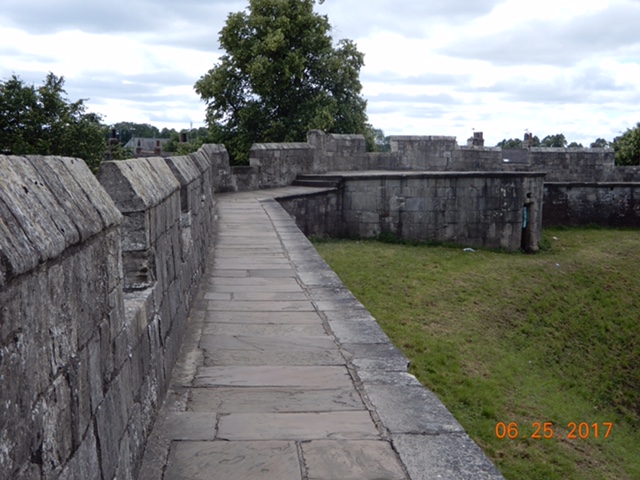
York City walls
9B900063-13FB-4455-928B-7FE639D6A319
York City walls
BF7E4A70-06D5-42B3-83A1-AD09395737FD
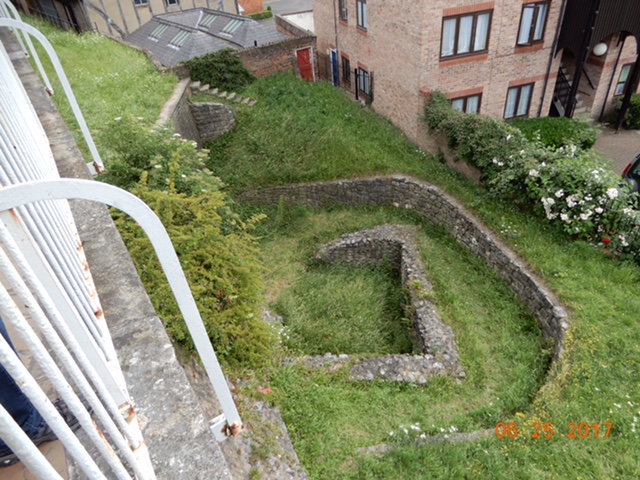
The old Roman Walls
BBE9183C-B7AB-4ED0-B111-6B942F3C1780
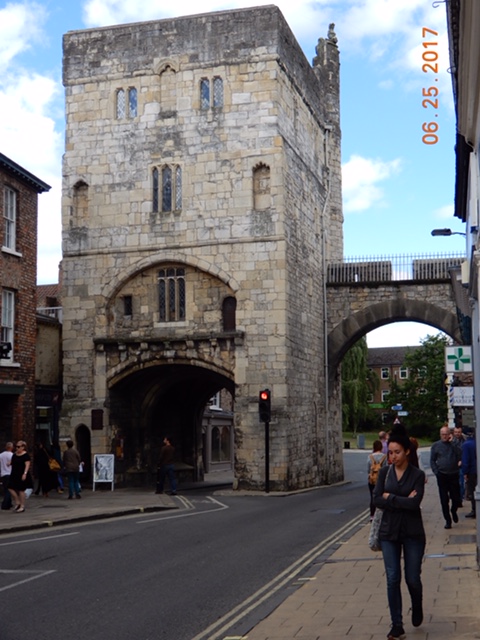
Last remaining city gate with a barbican

Sunday afternoon we walked the York city walls. York has more intact city walls than any other city in England. The two-plus miles of wall have protected York for 2000 years starting with the Romans and continuing through Saxon, then Viking, then Norman occupations. The Romans built walls that survived to the Viking invasion. In the 9th Century the Vikings buried the roman walls with a dirt bank topped with a wooden palisade which remained until the present medieval stone walls were erected in the 13th and 14th centuries. There were four main gates – called Bars – and six secondary gates giving access to the city.

613D2579-2EE0-4A3B-B586-4C7F21D86A21
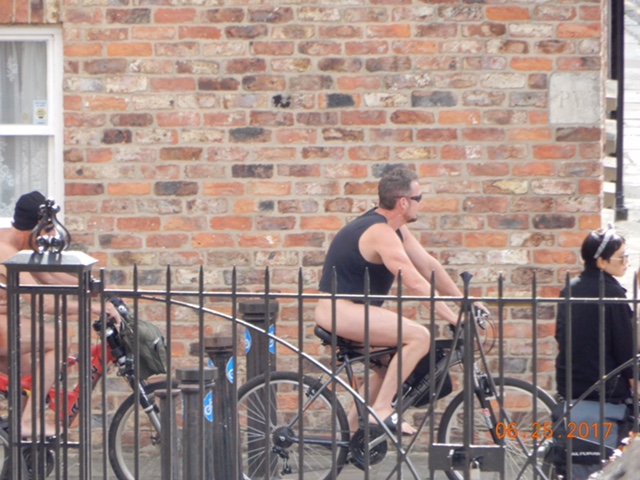
Butt-nekkid parader

We had visited York in 2000 but only walked a portion of the walls, Sunday we walked the whole thing. It’s pretty impressive. Along our way we heard someone shouting like a town crier in the streets and between buildings we saw a small parade of butt-nekkid male bicycle riders. We were only quick enough to get a photo of the last participant which we happily share. We don’t know, but we thought it may have been a Gay Pride event since such things were happening elsewhere in the world. It was fun to see!

Monday we walked the town within the walls. It looked like the weather, which has been very nice – high 60s – was going to take a turn for the worse beginning Tuesday. We needed to top off our SIM card after which our goal was to reach the Shambles, probably the most famous street in all of York.

FullSizeRenderFullSizeRender

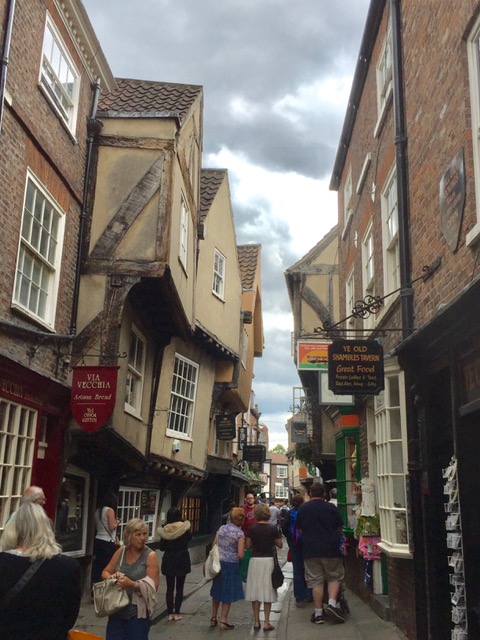
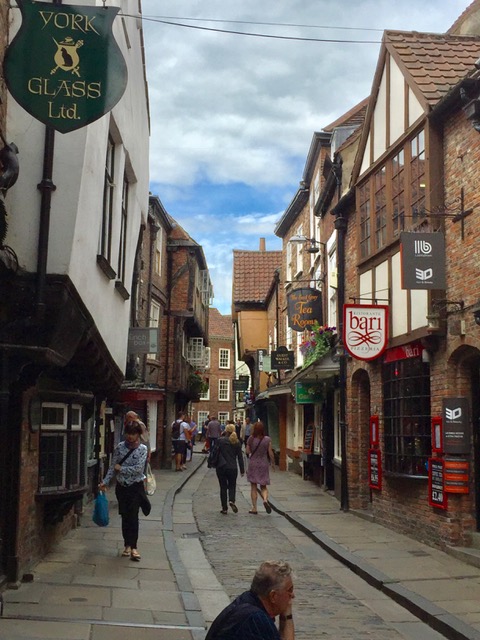
The Shambles is a street in York City Centre dating back to at least the 14th Century (1300s). It was originally where the butcher shops were located. The name is believed to be derived from Anglo-Saxon “Fleshammels” (literally “flesh shelves”) or where the butchers laid their meats out for sale. It is famous for the overhanging half-timbered buildings leaning towards each other in a most picturesque manner. Originally those overhangs protected premature meat spoilage from sun exposure. Today, instead of butcher shops, restaurants, souvenir shops and the like occupy the street.

AA22E8A4-A4AD-4BFB-B811-D9E48891D143
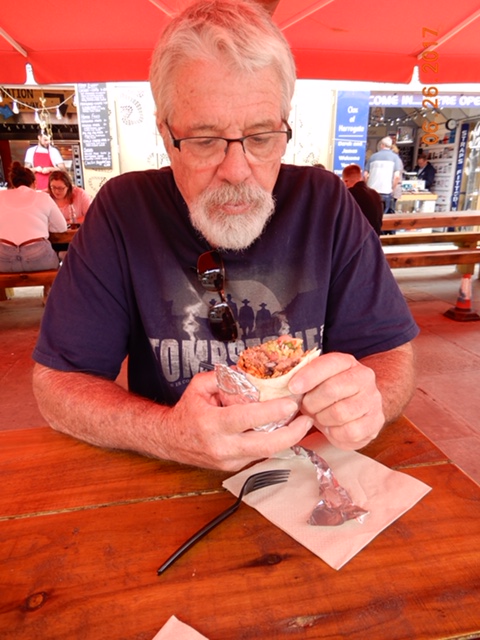
Lunch at Shambles market – pulled pork wrap

An open air market was occurring in the square the Shambles opens onto and we had lunch there; a pulled pork wrap sold by an enterprising young chef who was introduced to the recipe while attending college in North Carolina for a year.
We spent the remainder of the day at the Castle complex museums.
The castle complex dates back to the time of the Norman conquest. In 1068 the Normans subdued rebels and Vikings and built a motte and bailey castle. A motte is a raised earthwork and a bailey is an enclosed courtyard protected by a ditch and palisade. A wooden keep (fortified tower) was on top of the motte.


An infamous event happened at Clifford’s Tower in 1190 when riots against Jews forced about 150 of them to take refuge in the wooden tower. Given the choice of conversion to Christianity or death at the hands of the mob, the Jews chose a third option: suicide. They set the tower keep on fire and died within as it burned. In present times, daffodils have been planted around the tower mound in remembrance of the massacre.


After the fire, the keep was rebuilt in stone and the remains of that structure is what we see today along with the castle buildings at the base of the mound. The castle buildings have housed courts, treasuries and prisons over the course of it 1000 year history.
Today, the castle houses a Victorian-age museum. In the late 1890s Dr. John Kirk began a passionate (I might say obsessive) collection of all things Victorian. In time his collection was so large that he struck a deal with the city of York to develop an innovative museum in the former women’s prison at the castle. The museum features period rooms and a re-creation of a Victorian street named Kirkgate. It is a fascinating way to spend an afternoon. As usual, when we visit museums, I read everything plaque and peruse every display ad nauseam. We’ve developed a rule that we cannot leave a museum gallery separately for fear of losing one another. Bruce is always finished before me and yet he is the most patient soul awaiting my arrival.

The Bronte Sisters & Fountains Abbey


6/22/17 – The Bronte sisters & Fountains Abbey and Studley Royal
We left Settle Thursday morning after checking our social media accounts and learned from Lisa T-H that we were in Bronte country. As my ignorance of the Peak District showed, our knowledge of English geography is terrible. We were in the Yorkshire Dales, but I always thought the North Yorkshire Moors in the east were the moors referred to in Charlotte Bronte’s novel Wuthering Heights. As voracious a reader as I am, I’m ashamed to say I have never read any of the Bronte sister’s novels. I have no clue about the storylines nor the locations in which they are set. All I know is sweeping moors play an important part in Wuthering Heights, and I have been to the the North Yorkshire Moors. In this case, one plus one does not equal two. The Brontes spent their lives in the Yorkshire Dales. In England a dale is a valley. Valleys lie at the bottom of hills
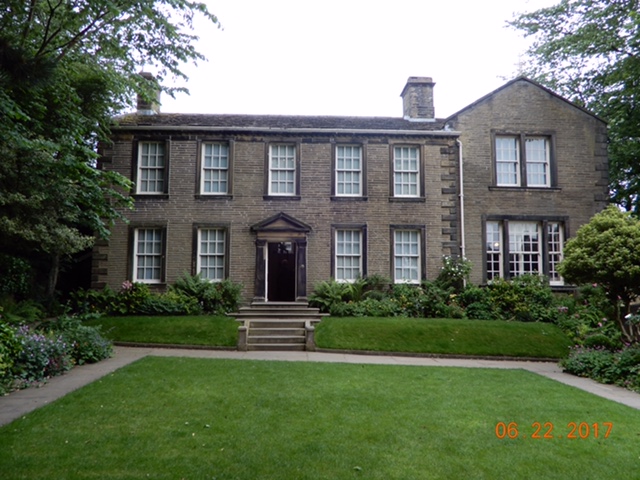
We were only 25 miles away from Howarth, the town the family lived in, and we decided we would visit the Bronte parsonage where the family spent almost their entire lives. We plugged Howarth and Bronte Parsonage into Tammy/Theresa and set off.

DSCN0956DSCN0952
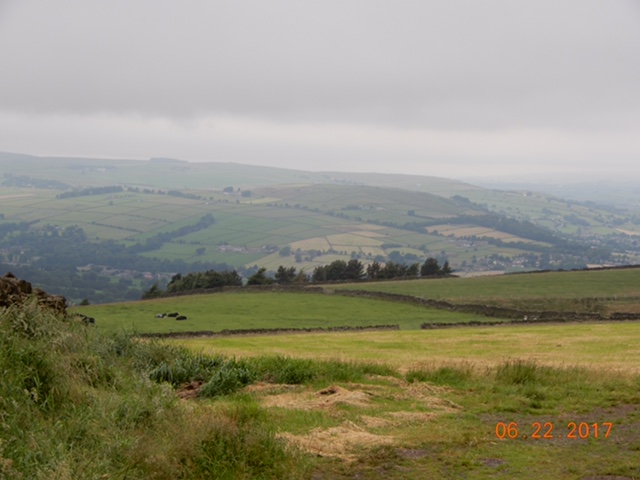
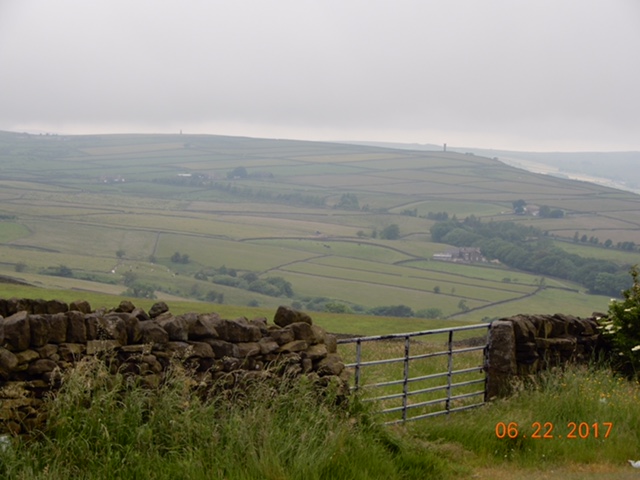
The roads we followed took us over hill and dale, through wee little villages and onto wee little roads with 16% grades both up and down. At 12 mph it took us some time to reach the top of the hills and we saw a panorama of wind blown fields and drystone walls drawing crisscross lines across the hillsides. We got out of the van and were immediately buffeted by winds blowing across the hills. There was a sense of loneliness and isolation up there at the top and I could imagine that influencing the Bronte writing.
We still hadn’t arrived at Howarth, so we continued up and down hills along tiny lanes winding our way around villages until we finally came up to the village.

1EF18E57-2F24-445C-BBA0-429D3F9B89F7
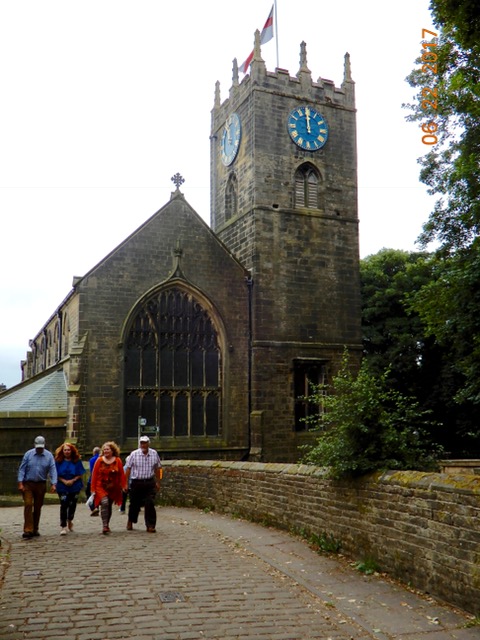
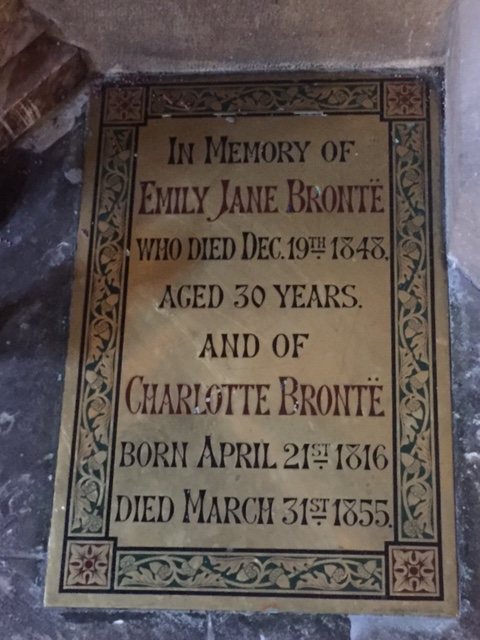
The Bronte Church

IMG_1165

DSCN0979
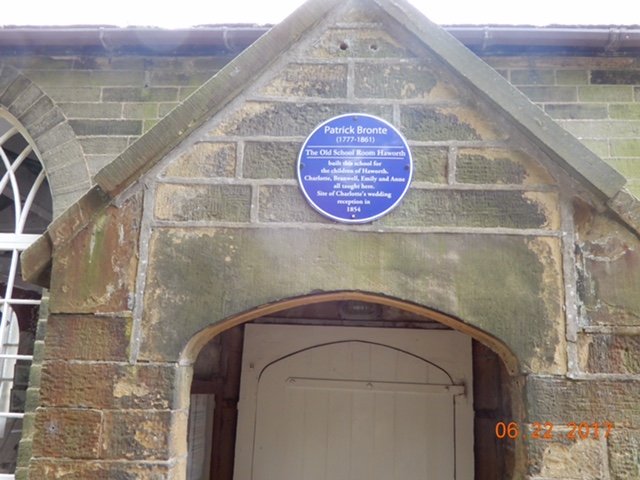
School where sisters taught

There are a lot of literary people in this world. Three buses were in the pay and park lot and the village teemed with tourists. I had no idea this would be such a popular tourist attraction especially since it was so difficult for us to get there; we assumed it would be fairly quiet. We walked to the church where the patriarch, Patrick Bronte was parson for life (perpetual curate). He was a published poet so his six children grew up in a lettered home.

DSCN0982
The Bronte Parsonage

The Brontes were a tragic family. In 1821, after living only one year in Howarth, Maria Branwell Bronte, the mother of six children, died of cancer, she was 38. Four years later the two eldest daughters died of tuberculosis within months of each other. Branwell, the only boy in the family, died from alcohol and opiate addition at age 31. Emily and Ann, the two youngest sisters were 30 and 29 when they died. Charlotte managed to live through her 30s, dying just before her 39th birthday. Only Patrick lived a long life, dying at age 84, outliving all of his family. How sad.
Howarth was probably little changed since the days of the Brontes, most building were of the local stone with the stone shingles slowly weighing down the rooflines. Narrow streets were lined with small shops. I always wonder how the locals feel about the tourists than invade their home during the days. I can imagine that no matter how much money comes into the town, they are relieved to see the buses leave.

We left before the buses, taking a much easier route out of town and onward to Ripon. We were going to visit Fountains Abbey and Studley Royal Water Gardens – a World Heritage Site and an English Heritage Site.

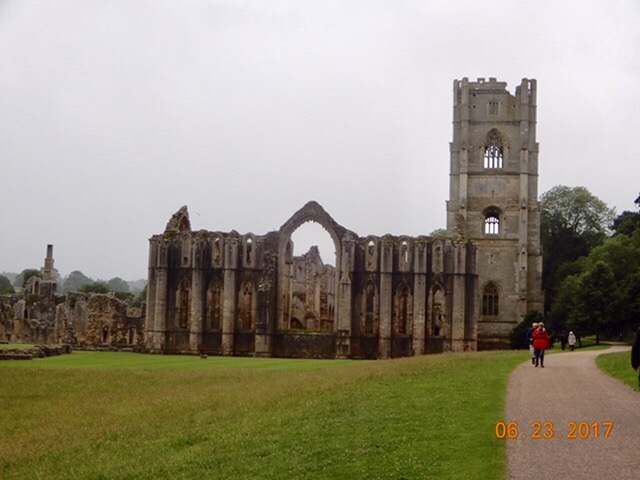
DSCN1030

Fountains Abbey is one of the largest and best preserved ruined Cistercian monasteries in all of England. Founded in 1132, it became the wealthiest monastery in the land. During the Dissolution in the late 1530s, Henry VIII disbanded all monasteries, priories, convents and friaries, appropriating their income, disposed of their assets and pocketed the money.

Today the Abbey is part of the Studley Royal Water Garden complex run by the National Trust and English Heritage. The Studley Royal Georgian Water Garden is a park with water features, pathways, copies of classic sculpture all laid out on hectares of land that was designed by the father and son owners of Studley Castle grounds. Surrounding the Abbey and Gardens is the Studley Royal Deer Park, home to over 500 red deer and the lovely St. Mary’s Church.


The whole complex is unbelievably beautiful but the abbey ruins were the thing to us. We have seen some church ruins but this…this was something! The size of the abbey was shocking. It was built in an open meadow giving it a lot of room to expand, and it did. The ruins are stunning – we can only imagine how it looked in the years before the Dissolution.

A Three Horn Day

6/20/17 – A three horn day

Sunday found us on the road leaving Stratford-on-Avon towards the Costco at Coventry. Our intent was to drive by Warwick Castle for a photo opportunity. It is another iconic English Castle that has been restored and is now owned by Madame Tussaud’s. It has re-creations of different periods of the castle’s history and the entry fee was a lot steeper than we cared to pay. We asked Tammy/Theresa to direct us to the castle which she did with great alacrity. We were hoping for our approach to be via the river side where, if memory serves me correctly, the view is magnificent. Instead we went through the town and along the historic castle approach with beautiful old buildings lining the roadway towards castle keep. Then we took a wrong turn trying to find that photo view. We gave up and continued onward to Costco.
Bottom line is we have no photos to show the beautiful castle at Warwick.
We were on major roads that were busy with cars in a hurry to get home and prepare for the work week (we presume). The major roads had roundabouts with four lanes and directional traffic lights as well as four to six exit opportunities. It took a lot of concentration to keep all those variables in mind as well as to remember to drive on the left.
On the whole, Bruce has been an exceptional driver, but today we managed a three horn day. It seemed like every time we entered one of the complex roundabouts we pissed off some driver and were honked at. We fear we’re giving the Dutch a bad name.
We reached Costco around 11:30 and were amazed to see a half empty parking lot. British Costco’s are laid out identical to the American ones only they have British products – and we were so amused to see the misspelling of Tyre Centre on the side of the building.

35FABC3C-0E30-41C7-8B4C-688523C45712IMG_0349

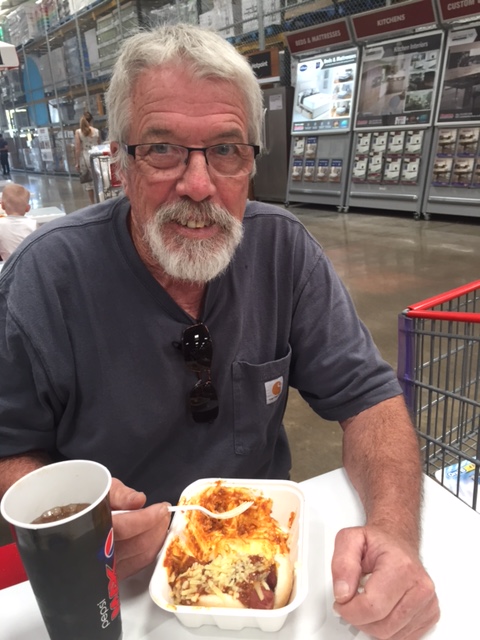
As always, we found a few items we felt in need of and we had to have the £1.50 hot dog for lunch. While the deal is the same, our American Costco hot dogs are ever so much better.

We were still making our way towards North Yorkshire Dales and the Wednesday meeting about the awning room. Along the way was the Peak District. In all the years I have heard of Britain’s Peak District, it never once crossed my mind to equate the name with mountain peaks. There are four peaks in England that are higher than 4000 feet, so to our mind the Peak District is full of foothills. It is as lovely as reputed with rolling hills and exposed cliffs of limestone. Dry rock walls sliced across great open fields dividing them into sheep and cattle paddocks.

987A134D-0CE1-4371-B76F-E251EA0DF44F45A3C345-9D8B-4F9C-A259-81A00871968B

Monday we revisited Chatsworth Stately Mansion, staying at the Caravan Club on the grounds of the estate. We walked to the mansion in hopes of visiting the gardens but were foiled by high entry fees which we would have paid had we never seen them, but we have, so we didn’t. We remember that Europe (including the UK) requires entry fees everywhere (our reason for joining the English Heritage) and we are picking and choosing our sights. We did go through the stables, now a restaurant/gift shop and walked among ranging sheep on our way to and from the campground. The estate is several hundred acres of landscaping, designed by the famous 18th century landscape architect, Capability Brown. It’s fascinating to think of an architect planning out a design and planting trees and hedges and gardens, all the while knowing they will not reach maturity for 100+ years.

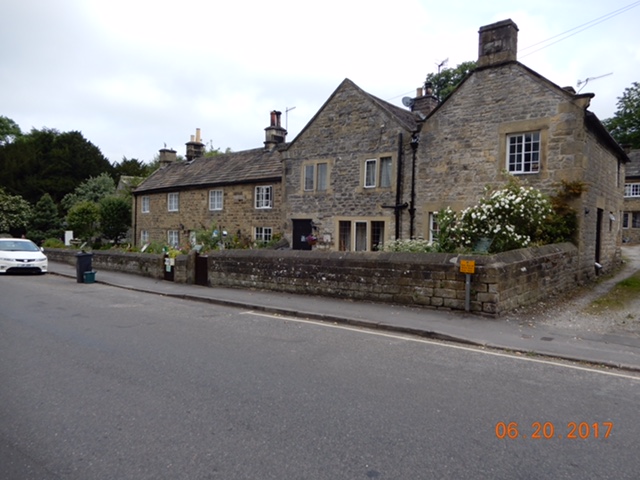
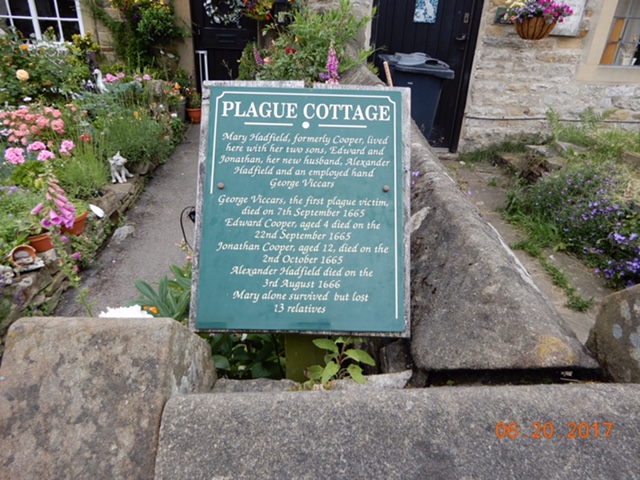
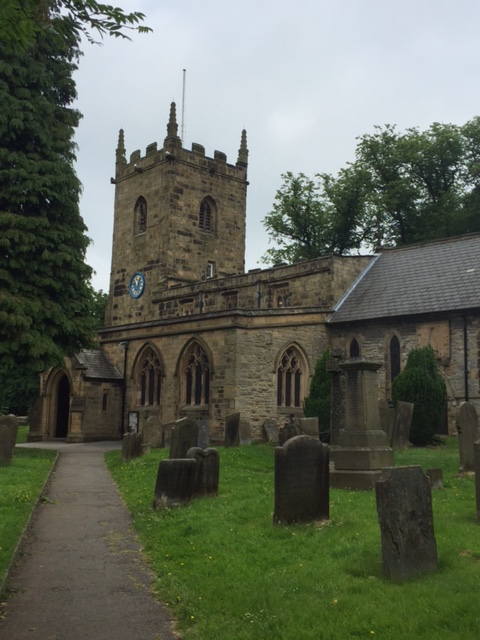
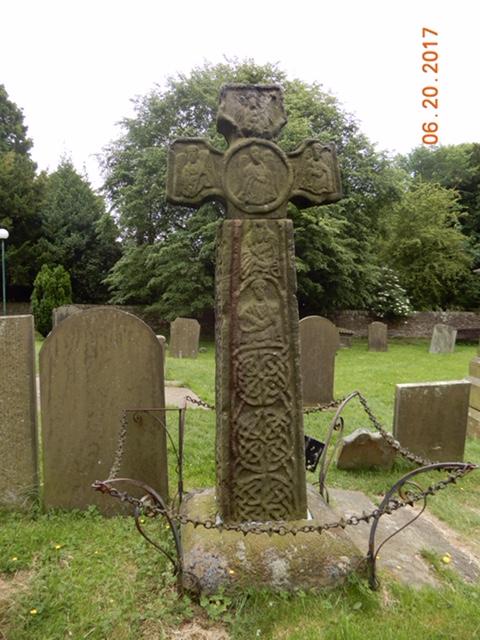
Six miles up the road from Chatsworth is the village of Eyam, famous for sacrificing 1/3 of its population to contain the bubonic plague within its town limits. The 1665 plague outbreak reached Eyam in September through a shipment of wool. As people began to die, the populous chose to isolate themselves in order to stop the spread of the disease. After 14 months the plague had run its course taking 253 local victims. Several houses – the plague homes – are still occupied. The parish church – St. Lawrence – dates from the 14th century and is surrounded by gravestones so worn by time as to be unreadable. A Celtic Cross from the 8th century is on the church grounds.
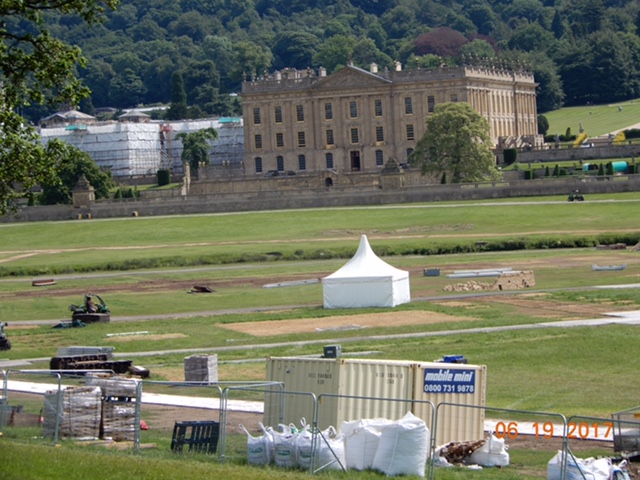
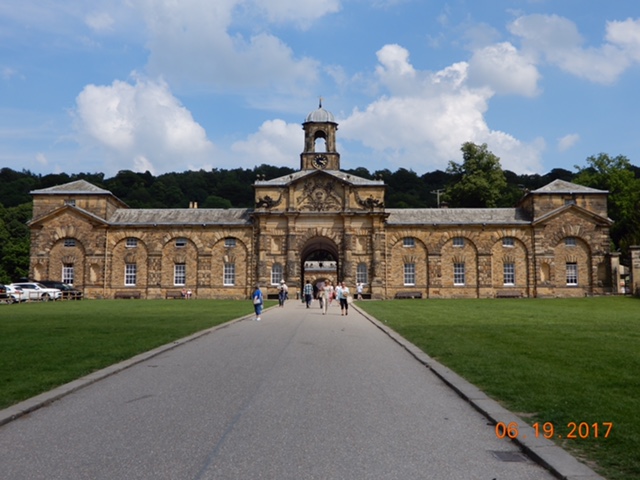
DSCN0929
Plague Cottages

DSCN0927

IMG_1122
14th Century parish church
DSCN0937
8th century stone cross
DSCN0943
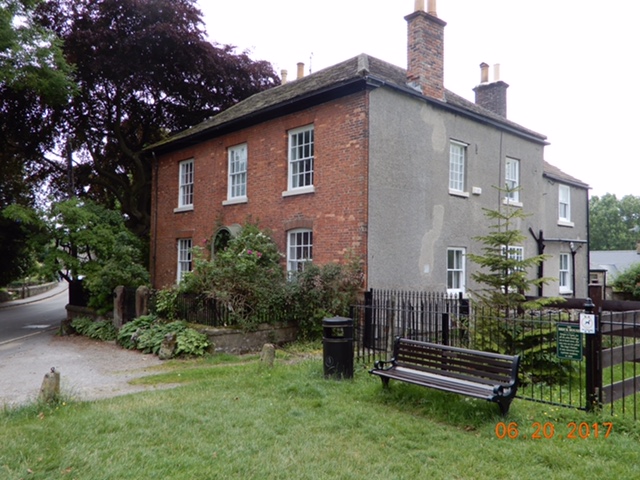
Only brick bldg in Eyam

The whole town is built of stone with the exception of one building made of brick. Originally an inn known as The Stag’s Parlour, it became a residence in 1878, almost 200 years ago. I don’t know how long the building stood as an inn.
We left Eyam to continue our drive through the Peak District countryside. We traveled back roads working our way to Sheffield where we picked up the M61 highway in order to make better time to our destination: Settle, in the Yorkshire Dales.

6/21/17 – Settle

IMG_0366

We bought the Safari Room to attach to our awning, doubling our enclosed living space. This will come in handy when we stay in one spot for several days, and most especially this winter when we hope to stay put for several weeks at a time. Now all we have to do is get efficient at putting it up and taking it down.

Shakespeare’s Town

6/17/2917 – Stratford on Avon

I came to Stratford on Avon in 1995 with my parents on a two week whirlwind trip through England. I desperately wanted to share it with Bruce.
As is often the case when travel maturity is apparent; what once enthralled now seemed commonplace. The heart of the town was lovely but no longer felt special, we had seen enough English towns by now to recognize the combination of ancient buildings and 20 century businesses.

Stratford-on-Avon has been a tourist town for 500 years celebrating all things Shakespeare. He was born here on April 23, 1564 and died here on April 23, 54 years later, exactly bookending a life of acclaim in London. We visited his birthplace and walked along a cobblestone alley he most assuredly walked as well. We tried to imagine what 16th century Stratford on Avon looked like with old half timbered houses facing High Street in town center and the town flowing down to the river Avon. A market was going on in a market square, reminiscent of centuries past but with a lot more commercial goods rather than food stuffs. Books I’ve read always led me to believe markets were where farmers sold their harvest and townspeople stocked up on their fresh foods.

3EAFC011-EF9E-493B-BDFE-0E97E408C092

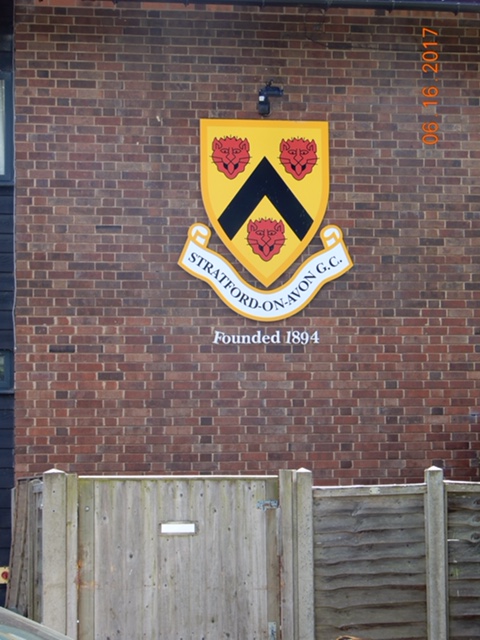
Walking into town from our camping we came across the Stratford on Avon Golf Club – established 1894 – and popped in to take a look. We spoke with the assistant pro in the shop and he gave us a little history of the place: Samuel Ryder – of Ryder Cup fame – was the the captain of the Golf Club in 1929 & 1930 and had hoped to have the first Ryder’s Cup tournament at that club but it was decided the course was too short.

6A5DF488-8FF6-47CA-AF0F-D178762A941B
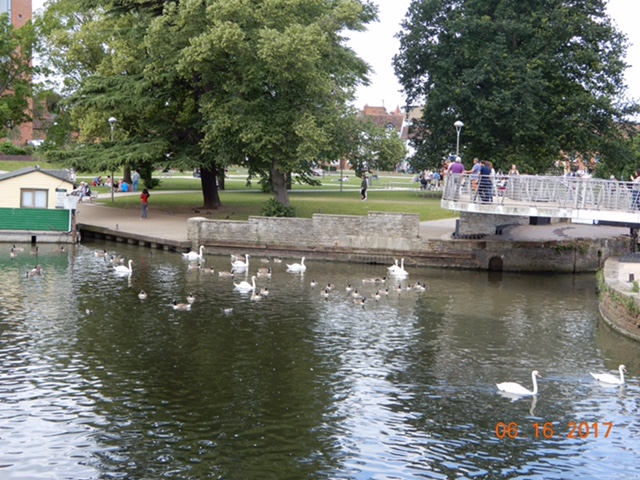
Avon river and swans

The river Avon flows alongside the town and it was here, 22 years ago, that I got my first look at canal locks and the narrow boats and mini-barges that go through them. These boats are up for rent and a holiday of 1-2 weeks would be an exquisite way to pass the time traveling from one town to another and taking in the sights. (K&L – are you up for it?)
We are evidently becoming like the Brits, focusing on the weather, which for the last two days has been”spot on!” With highs in the mid 80’s its a bit too warm for us, but lots of people in the camping are exposing their bonewhite skin to the bright sun. Lots of sunburned people by days end!
We’ve been thinking of expanding our space with an awning room and found one online that fits our budget. We have been making our way towards York on the eastern side of the country but the room is in the Yorkshire Dales on the west. We will be making a detour to the town of Settle in hopes of collecting it. But first its off to Costco in Coventry (of Lady Godiva fame). I need my Costco fix!